France Faces Massive Backlash Over Proposed 'Police Immunity' Law
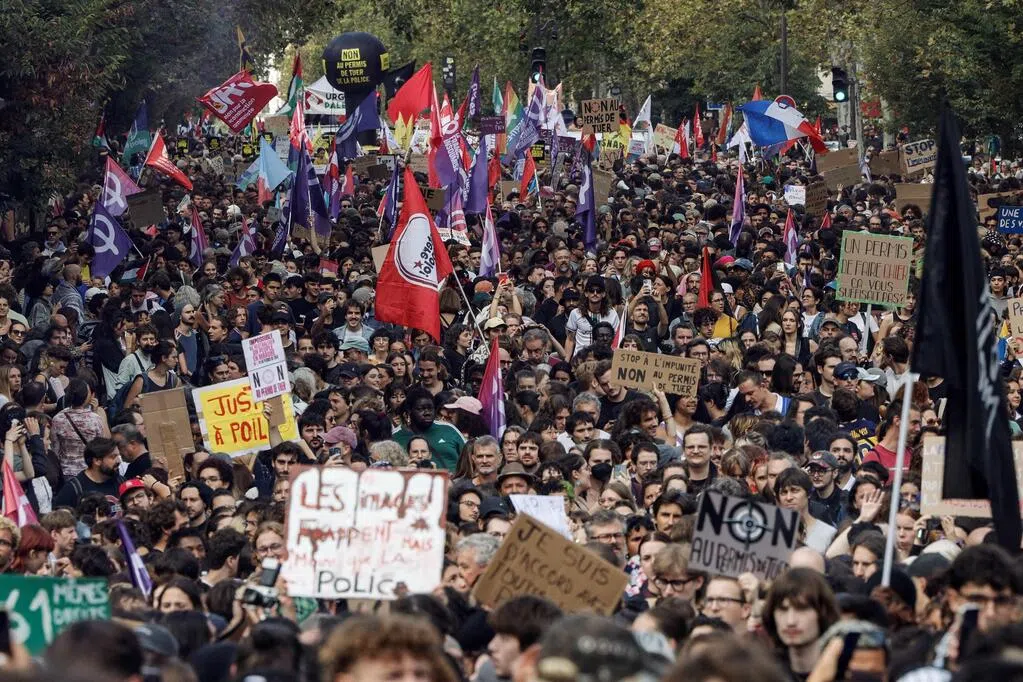
### Civil Unrest Grips Paris Over Controversial Law Enforcement Bill
**PARIS** — A wave of indignation swept through the French capital this past Sunday as thousands of protesters converged on the streets of Paris. The demonstrations were sparked by a contentious legislative proposal that seeks to fundamentally alter the legal protections afforded to law enforcement officers when using lethal force.
#### The Core of the Controversy
At the center of the turmoil is a bill that introduces a legal presumption of self-defense for any law enforcement officer who employs a weapon during the line of duty. Under the proposed framework, the burden of proof would effectively shift, as the use of force by police or gendarmes would be presumed legal and justified by the circumstances of the encounter.
This legal pivot has sent shockwaves through the French civil society. Legal experts and human rights advocates argue that such a provision creates a dangerous loophole in the justice system. By automating the presumption of legality, critics assert that the state is essentially granting security forces a "license to kill," potentially shielding officers from accountability for excessive force or unwarranted violence.
#### Political and Human Rights Outcry
The protests saw a diverse coalition of participants, ranging from high-profile political figures to international advocacy groups. Mathilde Panot, a prominent member of the National Assembly representing the far-left party *La France Insoumise* (LFI), was among the leading voices at the rally.
Speaking passionately to the crowd, Panot demanded that the Senate intervene to block the bill. She highlighted a grim reality, claiming that police violence is already a systemic issue and that the new law would only exacerbate the problem. Panot emphasized that granting systemic immunity to police would be an affront to the principles of equality before the law, arguing that no specific group should be given the unilateral power to decide the life or death of other citizens without strict oversight.
#### A Broad Coalition of Dissent
The opposition is not limited to political fringes. The protests were bolstered by the presence of representatives from some of the most respected human rights and legal bodies in the country. Amnesty International, the French League for Human Rights, and the French Judges' Union all sent delegations to join the march, signaling a rare alignment between the judiciary and civil rights activists.
While Paris served as the epicenter of the unrest, the movement extended far beyond the capital. Over the weekend, dozens of similar demonstrations erupted in various cities across France, reflecting a nationwide anxiety over the erosion of civil liberties and the potential for state-sponsored impunity.
#### A Dismissed Public Mandate
This legislative battle has been simmering for months. In an attempt to halt the bill's progress, a massive online petition was launched on the website of the National Assembly. The petition garnered an overwhelming 730,000 signatures, demonstrating a significant level of public disapproval.
Despite this overwhelming show of public sentiment, the National Assembly's legal committee summarily rejected the petition in July. Despite the dismissal, the National Assembly proceeded to pass the bill, leaving the Senate as the final legislative hurdle.
#### Looking Ahead
As the bill now awaits a vote in the Senate, the tension in France remains high. The outcome of this vote will not only determine the legality of police conduct but will also serve as a litmus test for the government's willingness to listen to the concerns of its citizens regarding human rights and state power. For the thousands who marched this Sunday, the goal is clear: the Senate must veto the bill to ensure that law enforcement remains accountable to the law and the people they are sworn to protect.