Escalation in the Middle East: US and Iran Engage in Tit-for-Tat Military Strikes
The fragile peace that had characterized the Middle East in recent weeks has been shattered as the United States and Iran have entered a dangerous cycle of reciprocal military aggression. This surge in tensions reached a boiling point on Tuesday, September 1, when the U.S. military executed a series of precision strikes targeting critical Iranian infrastructure. According to the U.S. Central Command, the operations focused on neutralizing the capabilities of the Islamic Revolutionary Guard Corps (IRGC), specifically targeting air defense positions, radar systems, communication hubs, and maritime facilities used for mine-laying operations.
President Donald Trump justified the offensive as a necessary response to Iranian provocations. The administration cited Iran's attempts to deploy naval mines in the strategically vital Strait of Hormuz and the launch of eight missiles directed at a U.S. military installation in Jordan. In a series of social media posts, President Trump issued a stern warning to Tehran, suggesting that any further retaliation would be met with a response that is both "more ferocious and of a higher magnitude." He cautioned that a larger offensive was already prepared, claiming that if the conflict continued, Iran would be left with very little remaining.
In a significant shift in strategy, reports from Axios indicate that the U.S. targeted two Iranian government-owned oil tankers. This marks the first time the United States has directly targeted Iranian state vessels in retaliation for attacks on commercial shipping in the Gulf. This move signals a willingness by Washington to strike at the economic heart of the Iranian regime to deter maritime interference.
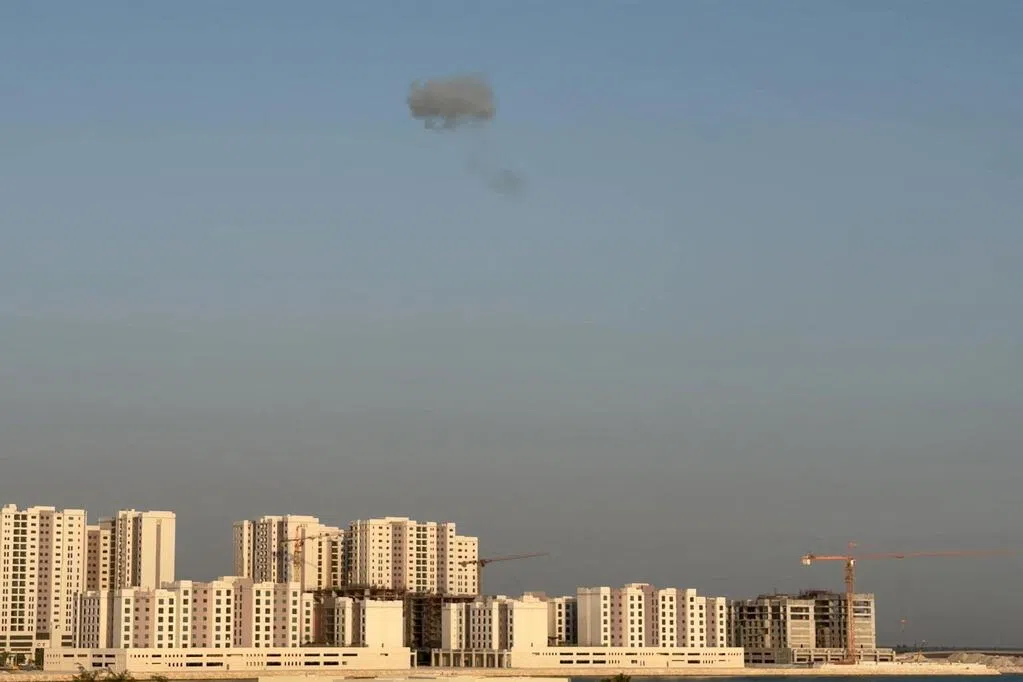
Tehran responded swiftly and aggressively. Ignoring warnings from the White House, Iran launched a wave of drone and missile attacks on Wednesday, targeting U.S. military assets stationed in the United Arab Emirates, Bahrain, Kuwait, Jordan, and Iraq. The IRGC claimed that their operations resulted in several U.S. military casualties in Jordan and northern Iraq, specifically in Erbil. While the Jordanian military reported that its air defense systems successfully intercepted 13 ballistic missiles, and Bahrain reported the destruction of incoming drones, the regional instability has caused widespread alarm.
Beyond the military targets, the human cost of the escalation has become a focal point of international condemnation. Reports and videos released by the Iranian Red Crescent Society reveal a devastating strike on a wedding celebration in the Hormozgan province. The attack resulted in the deaths of four civilians, including a child, and left over 50 people injured. Iran's chief negotiator, Kalibaf, condemned these actions in scathing terms, describing the targeting of civilians as "satanic." In contrast, U.S. Central Command maintained that its operations avoid civilian targets, contrasting their precision with the tactics of the IRGC.
Economically, the conflict has sent shockwaves through global markets. Asian stock markets plummeted on Wednesday, and global oil prices surged to a five-week high as investors feared a prolonged disruption of energy supplies. The geopolitical tension has put immense pressure on mediators. Qatar warned that Iran's retaliatory strikes complicate efforts to de-escalate the situation, though Pakistan remains cautiously optimistic that both parties might eventually return to the negotiating table.
Adding another layer to the tension is a conflicting narrative regarding the strategic value of the Strait of Hormuz. U.S. Treasury Secretary Bessent recently suggested that the waterway would become irrelevant within two years as oil pipelines provide alternative routes. However, economic analysts and Bloomberg have criticized this view as overly simplistic, noting that shifting global energy infrastructure takes decades and that critical commodities like fertilizers and aluminum still rely heavily on the strait. While U.S. Energy Secretary Wright noted that oil flow reached a peak of 17 million barrels on Monday, shipping data shows a sharp decline in vessel traffic immediately following the strikes, reflecting the high risk currently associated with navigating the region.