Diplomatic Deadlock: US and Iran Trade Conflicting Reports on Doha Negotiations
In a display of diplomatic dissonance, the United States and the Islamic Republic of Iran have issued sharply conflicting reports regarding potential high-level discussions in the Qatari capital of Doha. The situation has evolved into a public contradiction of narratives, with both leaders presenting vastly different versions of the current state of bilateral engagement.
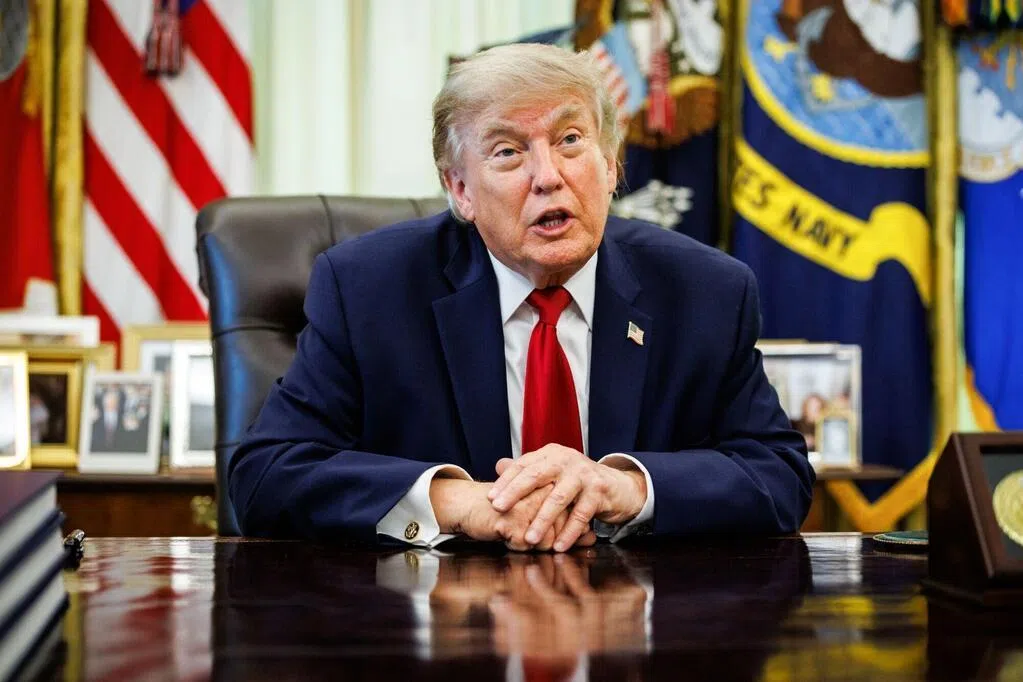
Speaking from the Oval Office on Monday, June 29, President Donald Trump adopted a tone of strategic ambiguity regarding the nature of the diplomatic outreach. While confirming that the United States is maintaining a dominant military position, Trump reiterated his administration's unwavering commitment to preventing Iran from acquiring nuclear weapons. When questioned about the significance of the meetings in Doha, Trump remained non-committal, suggesting that the outcome and the very importance of the gathering remained to be seen. He characterized the proceedings as something that could either be pivotal or entirely inconsequential, leaving the ultimate verdict to future events.
Adding to the confusion, President Trump utilized social media to announce that, following a formal request from Tehran, American and Iranian delegations were set to convene in Doha on Tuesday, June 30. This public announcement seemed to signal a potential thaw in relations or at least a willingness to engage in technical dialogue.
However, this narrative was swiftly dismantled by officials in Tehran. Esmaeil Baghaei, the spokesperson for the Iranian Ministry of Foreign Affairs, provided a starkly different account during a media interview. Baghaei explicitly denied that the presence of Iranian technical teams in Doha was linked to any coordination with the United States. Furthermore, he emphasized that there were no scheduled meetings between the two nations at any level of government in the coming days, directly contradicting the White House's claims of an impending summit.
Amidst this communicative chaos, Iranian President Pezeshkian has sought to project an image of steady leadership and strategic patience. Through posts on the X platform, Pezeshkian articulated a philosophy of governance based on rationality and the preservation of human dignity. He argued that the appropriate response to what he described as 'unjustified boasting and groundless threats' is to remain decisive and fearless while operating within a framework of reason.
Adding a layer of visual evidence to the diplomatic puzzle, state media in Iran recently released images showing President Pezeshkian holding a Memorandum of Understanding (MOU) signed by both himself and President Trump. Pezeshkian noted that the fulfillment of such understandings is a bilateral responsibility. He asserted that while Iran is prepared to honor its obligations, such actions are strictly contingent upon the United States demonstrating reciprocal compliance with the agreed-upon terms.
This current friction occurs against a backdrop of heightened regional volatility. Recent reports indicate that military tensions have spilled over into neighboring territories, including Kuwait and Bahrain, while the US has previously threatened the total destruction of Iranian military capabilities. The discrepancy between the two governments' accounts of the Doha meetings suggests a deep-seated trust deficit, where public statements are used as tools for leverage rather than transparent communication. As both nations navigate this precarious path, the international community remains watchful to see whether these contradictory signals lead to a renewed diplomatic breakthrough or further escalate into an open confrontation.