German Authorities Apprehend Ukrainian National in Croatia Over Nord Stream Sabotage
In a significant breakthrough for one of Europe's most complex criminal investigations, the German Federal Prosecutor's Office has confirmed the apprehension of a Ukrainian national in Croatia. The suspect, identified as Vladimir Z, was taken into custody in the city of Pula through a coordinated operation involving local Croatian law enforcement agencies. This arrest represents a major step forward in uncovering the individuals responsible for the catastrophic destruction of the Nord Stream pipelines in September 2022.
According to official statements released by German authorities on Wednesday, Vladimir Z is facing several severe allegations. The charges include the intentional causing of explosions, engaging in unconstitutional acts of sabotage, and the widespread destruction of critical infrastructure. German investigators believe that Z was not acting alone but was part of a specialized cell focused on maritime sabotage. Specifically, the prosecution has linked Z to a group associated with Serhii K, a former Ukrainian military officer who has already been the subject of intense legal scrutiny.
Serhii K, who was formally charged in July, is alleged to have orchestrated the operation on behalf of entities linked to the Ukrainian state. The investigation suggests that this group operated with high levels of technical sophistication to plant multiple explosive devices in the waters near the Danish island of Bornholm. The objective was to permanently disable the Nord Stream 1 and Nord Stream 2 pipelines, which served as the primary arteries for transporting natural gas from Russia to Germany and other European nations.
The legal proceedings are now moving toward the extradition phase. The German Federal Prosecutor's Office stated that the necessary legal mechanisms are being activated to bring Vladimir Z from Croatia to Germany, where he will be formally tried under German law. This move follows a series of legal hurdles and geopolitical tensions surrounding the case, including previous instances where suspects were released or extradition requests were contested in other European jurisdictions, such as Poland.
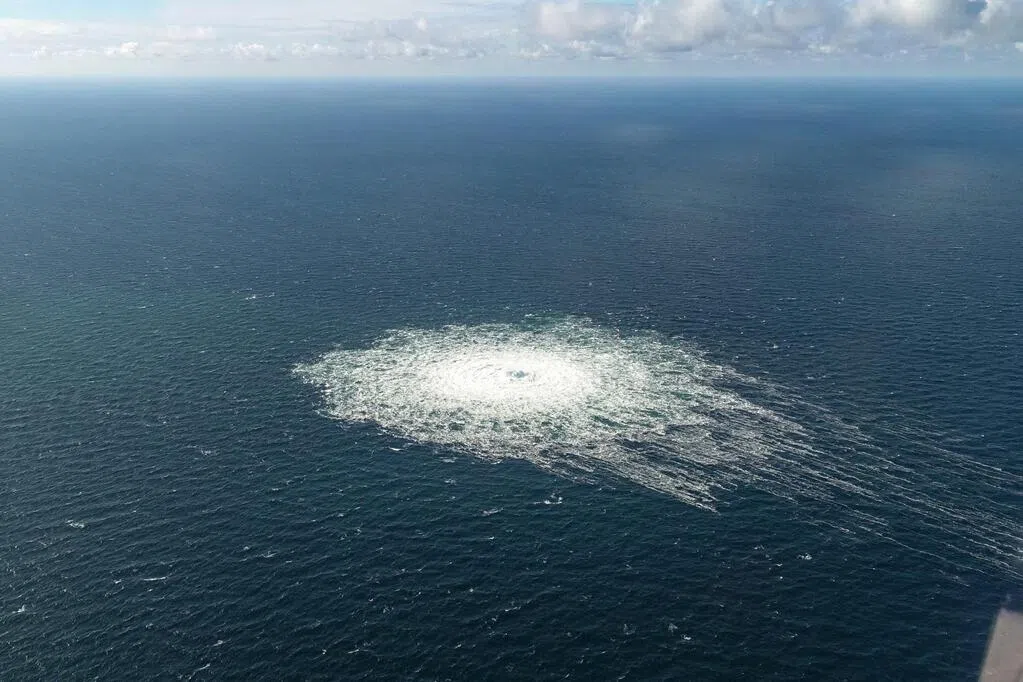
To understand the gravity of these charges, one must look back to the events of September 26, 2022. On that day, the Baltic seabed was rocked by a series of violent explosions that caused massive ruptures in three of the four pipelines. The resulting leak of methane gas was one of the largest single releases of greenhouse gases in history and created a visible bubble on the ocean surface. Beyond the environmental disaster, the sabotage effectively severed the energy link between Moscow and Berlin, accelerating Europe's pivot away from Russian energy dependencies amidst the ongoing conflict in Ukraine.
For years, the identity of the perpetrators remained a subject of intense international speculation, with accusations flying between Western intelligence agencies and the Kremlin. However, the recent focus on a group of Ukrainian nationals suggests that the investigation has shifted toward a more specific operational lead. The case highlights the extreme risks associated with underwater infrastructure and the difficulty of policing the deep-sea environments of the Baltic.
As Vladimir Z awaits his transfer to Germany, the international community remains watchful. The trial is expected to provide critical insights into whether the sabotage was a rogue operation by military veterans or a state-sanctioned mission designed to prevent Russia from using energy as a political weapon. For Germany, the resolution of this case is not only about legal justice but about the security of its national infrastructure and the stability of its diplomatic relations in a volatile geopolitical landscape.