International Coalition Condemns Israeli Expansion in E1 Area, Warning of Collapse of Two-State Solution
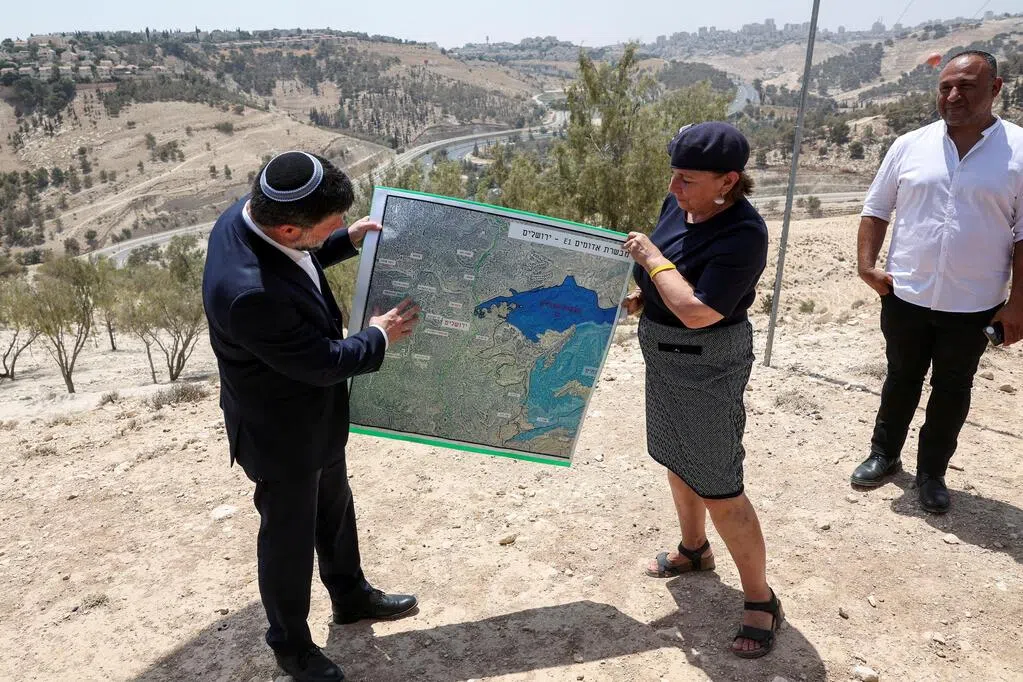
In a coordinated diplomatic effort to curb the expansion of Israeli settlements in the West Bank, a coalition comprising six European nations and Canada has issued a stern joint declaration. The group—consisting of the United Kingdom, France, Germany, Italy, the Netherlands, Norway, and Canada—explicitly condemned the Israeli government's recent decision to initiate bidding processes for construction projects in the so-called "E1" zone. The signatory nations characterized the move as "unacceptable," arguing that the development of this specific corridor would create an insurmountable physical barrier across the West Bank.
From a geopolitical perspective, the E1 area is considered one of the most volatile and strategic points in the region. Diplomats argue that if Israel proceeds with the urban development of this zone, it will effectively sever the connection between the northern and southern parts of the West Bank, while simultaneously isolating East Jerusalem from its Palestinian hinterland. Such a fragmentation would destroy the territorial continuity essential for a viable Palestinian state, thereby dealing a potentially fatal blow to the long-standing "Two-State Solution" framework supported by the majority of the global community.
Throughout the statement, the seven countries reiterated that the international community's position remains steadfast: Israeli settlements in the West Bank are illegal under international law. This stance is not merely a diplomatic preference but is rooted in legal frameworks supported by multiple United Nations Security Council resolutions. The coalition emphasized that the continued expansion of these settlements defies international mandates and complicates any future peace negotiations.
Adding to the gravity of the situation is the current atmosphere on the ground. The statement highlighted a worrying surge in instability within the West Bank, noting that violence perpetrated by settlers against Palestinian civilians has reached unprecedented levels. Furthermore, the coalition pointed out that the Palestinian economy is already under severe strain due to restrictive Israeli policies. In this context, the push to advance the E1 project is viewed not just as a land dispute, but as an escalation that could trigger wider conflict.
Beyond the diplomatic condemnation, the coalition issued a direct warning to the private sector. They urged businesses and construction firms to abstain from participating in the bidding processes for the E1 projects. The statement cautioned that companies engaging in these activities may expose themselves to severe legal repercussions and long-term reputational damage, as they would be contributing to projects deemed illegal by a significant portion of the international community.
Parallel to this joint action, the United Kingdom has taken a more aggressive individual approach. The British government announced that it is preparing to implement targeted sanctions against specific Israeli individuals involved in the "illegal expansion" of settlements in both the Gaza Strip and the West Bank. This marks a shift toward utilizing financial and travel restrictions to deter settlement growth.
These international pressures come amidst a bold ideological push within the Israeli government. Recent reports indicate that the Israeli Ministry of Finance, led by Bezalel Smotrich, has signaled a desire to drastically increase the scale of housing units in the E1 area. While initial tenders mentioned roughly 1,234 homes, Smotrich has openly expressed a vision to approve over 3,400 units. Most provocatively, Smotrich has stated that the objective of this expansion is to effectively "bury" the possibility of a sovereign Palestinian state.
The roots of this conflict stretch back to the 1967 Third Middle East War, during which Israel occupied the West Bank and East Jerusalem. Since then, the establishment of Jewish settlements has remained a central point of contention. The continuous restrictions on Palestinian movement and the systematic appropriation of land have created a cycle of friction and resistance, leaving the region in a state of perpetual tension as international diplomacy struggles to keep pace with the physical changes on the ground.