EU Unveils Bold New Arctic Strategy to Counter Russian Militarization and Assert Strategic Autonomy
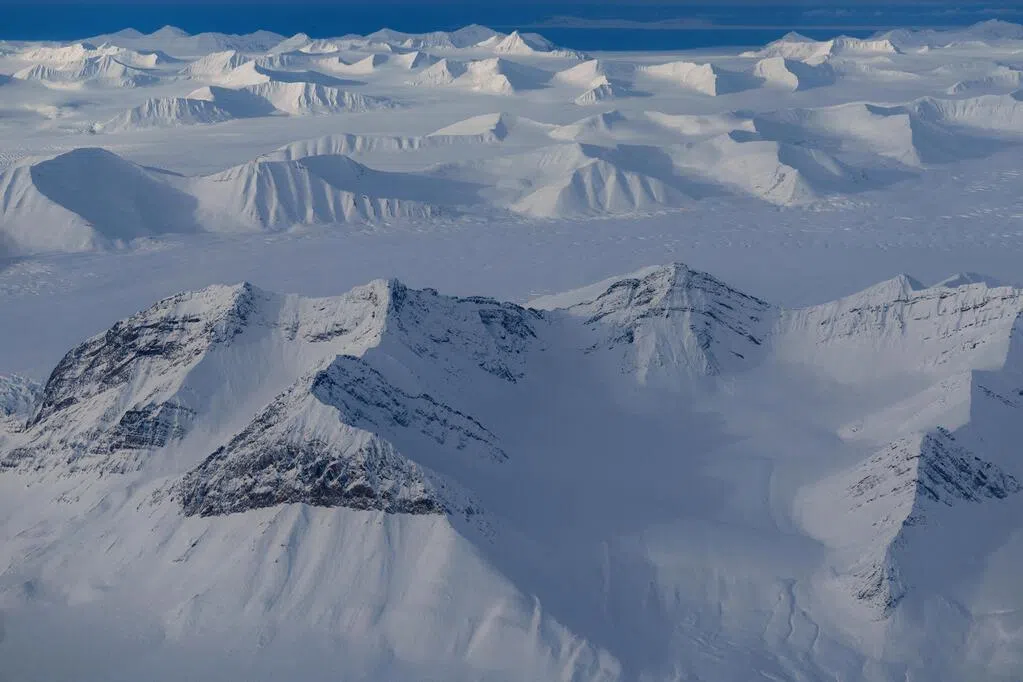
In a decisive move to reshape its presence in the High North, the European Union officially unveiled a comprehensive new Arctic strategy on Tuesday. The initiative marks a significant shift in Brussels' strategic posture, transitioning from a primarily environmental and scientific focus to one that acknowledges the harsh geopolitical realities of a region increasingly becoming a theater for great-power competition.
Speaking during the announcement, European Commission President Ursula von der Leyen emphasized that the era of taking Arctic stability for granted has ended. She pointed specifically to the rebuilding of Russia's military footprint in the region as a primary catalyst for this strategic pivot. According to von der Leyen, the Arctic is no longer a distant frontier but a critical component of the European Union's own territory and security architecture. She warned that as the rules governing sovereignty and territorial security are challenged, the EU must adapt its posture to ensure its interests are protected.
The strategic shift is driven by a combination of environmental changes and geopolitical pressures. As global warming accelerates the melting of polar ice, the region is becoming more accessible, unlocking vast deposits of critical raw materials and opening new maritime shipping routes. This has sparked a race for influence between Russia, China, and the United States. While the EU maintains that it seeks peaceful cooperation, the new strategy reflects a need to safeguard its economic and security interests against external aggression.
One of the most prominent pillars of the new plan is the pursuit of 'strategic autonomy' in infrastructure. The EU intends to reduce its dependence on foreign technology and infrastructure, particularly from the United States. A centerpiece of this effort is the IRIS² satellite internet project, designed to provide secure connectivity across the Arctic. This project is seen as a direct European alternative to Elon Musk's Starlink, ensuring that the EU has sovereign control over its communications in the Far North.
Furthermore, the EU plans to invest heavily in physical connectivity. The strategy outlines the construction of a 'secure and autonomous' subsea cable connecting the European mainland to Greenland. This cable is part of a broader pan-Arctic network intended to link Europe with Canada, Japan, and South Korea, thereby diversifying data routes and reducing vulnerability to sabotage.
Security concerns regarding Russia remain a central theme. The EU is preparing to counter aggressive Russian tactics, including the use of unmanned drones and the potential for underwater infrastructure sabotage. Additionally, Brussels plans to enhance data sharing and surveillance to monitor the so-called 'shadow fleet'—tankers used by Moscow to bypass international oil sanctions.
To support these ambitions, the EU will pursue a coordinated approach to maritime capabilities. This includes the joint procurement and sharing of icebreakers, which are essential for maintaining a physical presence in ice-covered waters. While the United States is listed as a potential partner, the strategy places a much heavier emphasis on 'like-minded' non-EU nations. Canada, in particular, is mentioned extensively, alongside the UK and Norway, signaling a desire to build a coalition of democratic states to balance the influence of Russia and China.
By integrating economic investment in raw materials with high-tech connectivity and security cooperation, the EU aims to transform the Arctic from a zone of vulnerability into a bastion of European strategic strength. The shift signals that Brussels is now prepared to play an active, and perhaps more assertive, role in the governance and security of the polar region.