Legal Stalemate: Former Venezuelan Leader Maduro and US Prosecutors Seek 2027 Trial Date
### Judicial Delays in the Case of the Fallen President
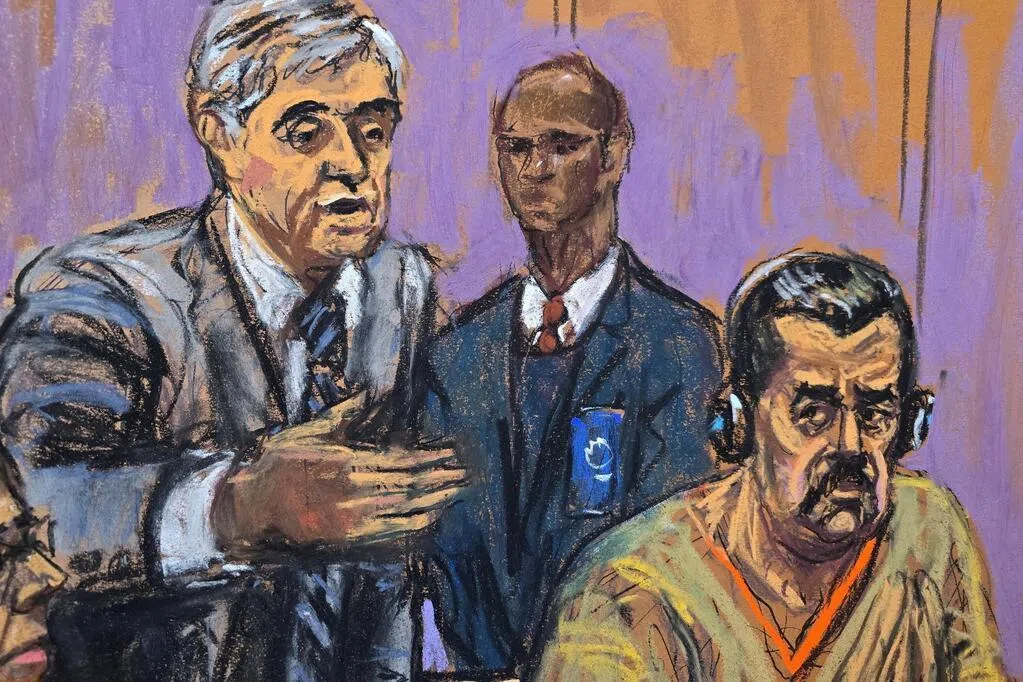
In a surprising development within the corridors of the Southern District of New York, a joint proposal has emerged from two unlikely partners: the defense team of former Venezuelan President Nicolás Maduro and the prosecutors of the United States Department of Justice. According to court documents filed on Tuesday, July 21, both parties have suggested that the criminal trial for Maduro—who faces grave allegations of narcotics trafficking—be scheduled for June 2027.
This legal maneuvering comes at a critical juncture, as a hearing was already slated for Wednesday, July 22, at noon Eastern Time. The proceedings, held at the Manhattan Federal Court, serve as a focal point for a case that has captured global attention due to its unprecedented nature. While the joint proposal suggests a distant date for the actual trial, the final decision rests entirely with U.S. District Judge Alvin Hellerstein. Both the prosecution and the defense have signaled in their filings that the current scheduling remains fluid and may be subject to further adjustments as the discovery process continues.
### The Shadow of "Operation Absolute Resolve"
To understand the gravity of these proceedings, one must look back to the early hours of January 3, when the geopolitical landscape of South America was irrevocably altered. Under the direct orders of former U.S. President Donald Trump, a massive military operation codenamed "Absolute Resolve" was launched. The mission involved a high-risk dawn raid on the Venezuelan capital, Caracas, where U.S. special forces penetrated deep into the city to apprehend Maduro and his wife, Cilia Flores.
The extraction was surgical in its objective but devastating in its execution. Maduro and Flores were forcibly detained and transported to the United States, where they were placed in the custody of the New York City Detention Center. However, the tactical success of the mission came at a heavy human cost. Reports indicate that the operation left a trail of destruction in its wake, resulting in the deaths of at least 100 individuals, the vast majority of whom were innocent civilians caught in the crossfire. In a stark contrast to the losses on the ground in Caracas, the U.S. military reported zero fatalities during the extraction process.
### Allegations of Narcoterrorism
Once on American soil, the couple was formally indicted on a series of severe charges. The U.S. government has accused the former president and his spouse of engaging in narcoterrorism and the large-scale smuggling of cocaine. These charges suggest a systemic use of state infrastructure to facilitate the movement of illicit drugs across borders, effectively turning a sovereign government into a criminal enterprise.
Despite the mounting evidence presented by federal investigators, Maduro and Flores have remained steadfast in their denial of all charges. Their legal team has consistently maintained that the arrests were politically motivated and that the charges are fabrications designed to justify an illegal intervention in Venezuelan sovereignty.
### A Nation in Transition
While the legal battle unfolds in Manhattan, Venezuela has attempted to stabilize its internal governance. Following the removal of Maduro, former Vice President Rodríguez stepped forward to fill the power vacuum. On January 5, Rodríguez took a solemn oath before the National Assembly to serve as the acting president, promising to steer the country toward a new era of stability.
The upcoming hearing before Judge Hellerstein will not only determine the timeline of the trial but will also serve as a reminder of the volatile intersection between international law, military intervention, and the pursuit of judicial accountability. For now, the prospect of a 2027 trial suggests a long road of legal battles ahead for the man who once ruled Venezuela with an iron fist.