North Korea Fires Ballistic Missile into Eastern Waters, Defiant on Nuclear Ambitions
### Pyongyang Escalates Regional Tensions with Latest Missile Test
**SEOUL** — In a move that has reignited security concerns across East Asia, the North Korean military conducted another ballistic missile launch on Sunday, marking the second such provocation within a span of eight days. The projectile was detected firing into the eastern waters of the Korean Peninsula, signaling Pyongyang's continued commitment to expanding its strategic weaponry despite mounting international pressure.
According to reports from South Korea's Joint Chiefs of Staff (JCS), the launch occurred at approximately 3:00 PM local time on September 20. Intelligence analysts have pinpointed the origin of the launch to the Wonsan area, a strategically significant coastal region. The JCS confirmed that after a detailed assessment of the flight trajectory and characteristics, the projectile was identified as a ballistic missile.
#### Trilateral Security Response
In the immediate aftermath of the launch, the South Korean military announced an increase in surveillance and readiness levels to guard against potential follow-up strikes. The event has triggered a high-level data-sharing mechanism between Seoul, Washington, and Tokyo. The trilateral alliance is currently coordinating closely to analyze the missile's technical specifications, including its range and payload capabilities, to better understand the evolving threat landscape.
Japan's Ministry of Defense also monitored the flight path of the missile. While Japanese officials confirmed that the object was likely a ballistic missile, they noted that the projectile eventually splashed down outside the Japanese Exclusive Economic Zone (EEZ). Despite the missile not entering Japanese territorial waters, Tokyo remains on high alert, viewing the frequency of these tests as a direct challenge to regional stability.
#### A Pattern of Provocation
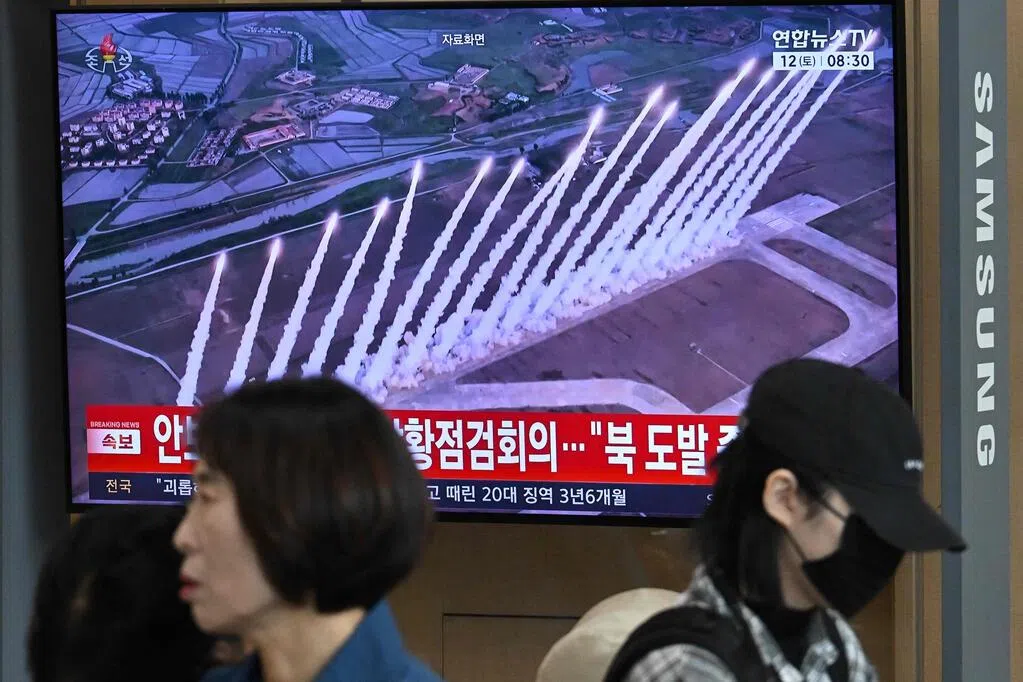
This latest event is not an isolated incident but part of a broader trend of military escalation. On September 12, North Korea conducted several short-range ballistic missile tests. Notably, those launches occurred just one day after the conclusion of "Freedom Edge," a routine joint military exercise conducted by the United States, South Korea, and Japan.
State-run media in Pyongyang later defended those earlier launches as "collaborative firepower strike training." According to official reports, the North Korean People's Army integrated four distinct combat systems—cruise missiles, ballistic missiles, rocket artillery, and unmanned aerial vehicles (UAVs)—to demonstrate a sophisticated, multi-dimensional strike capability. This suggests that Pyongyang is moving beyond simple testing and is instead focusing on complex, combined-arms tactical operations.
#### Nuclear Defiance and Political Rhetoric
Parallel to its military activities, North Korea has shifted its diplomatic tone toward open defiance. On Saturday, September 19, the regime issued a sharp rebuttal to a recent resolution passed by the International Atomic Energy Agency (IAEA) regarding the North's nuclear program. Pyongyang has explicitly rejected the agency's findings and reaffirmed its status as a recognized nuclear-weapon state.
Adding to the volatility is the rhetoric coming from the highest levels of the regime. Kim Yo Jong, the sister of leader Kim Jong Un and a powerful deputy director of the Workers' Party, has taken a hardline stance on the issue of denuclearization. In recent statements, she asserted that the nation's nuclear status is "absolute" and immutable. In a scathing critique of the international community, she characterized those who still harbor hopes for a nuclear-free Korean Peninsula as "fools," effectively slamming the door on diplomatic negotiations centered on disarmament.
As the regional powers continue to monitor the situation, the combination of missile tests and aggressive political rhetoric suggests that North Korea is preparing for a prolonged period of confrontation, utilizing its nuclear arsenal as both a deterrent and a tool for political leverage.