Pyongyang Warns of Tactical Weapon Deployment as Inter-Korean Border Tensions Reach Fever Pitch
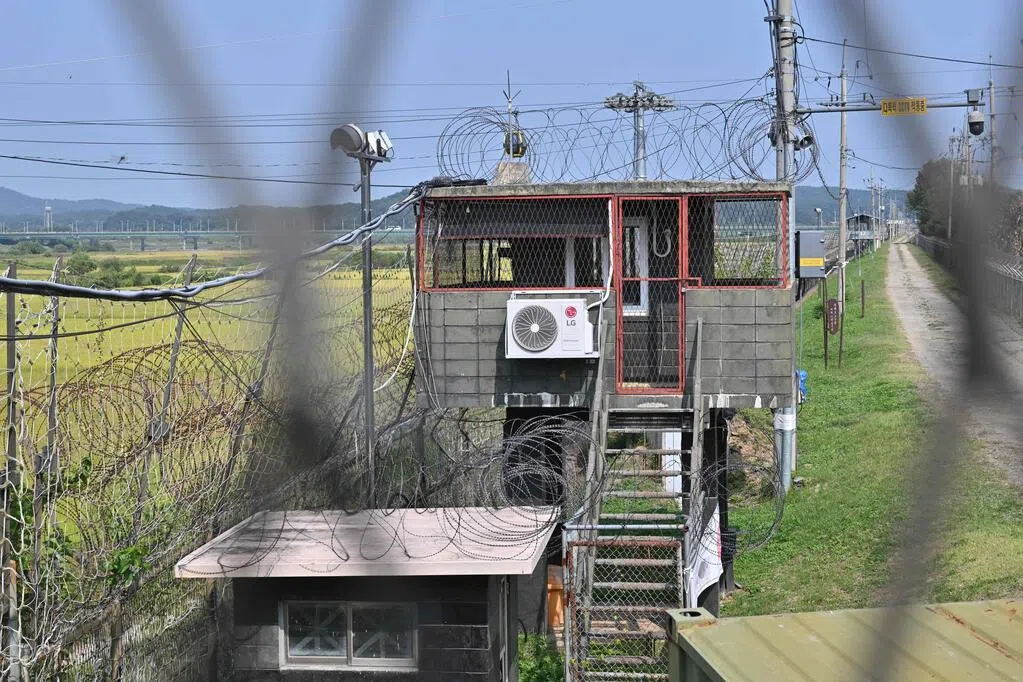
In a stark escalation of rhetoric, Kim Yo Jong, the sister of North Korean leader Kim Jong Un and a high-ranking official within the Workers' Party of Korea, announced on Monday that Pyongyang is contemplating a significant military buildup along the southern border. According to a statement released via the Korean Central News Agency (KCNA), the North is weighing the deployment of tactical weaponry and the restoration of psychological warfare through loudspeaker broadcasts to counter what it perceives as an increasingly hostile environment.
Kim Yo Jong characterized the current state of the inter-Korean border as "extremely unstable," directing sharp criticism toward the South Korean military. She described officials in Seoul as "war maniacs," alleging that they have endangered North Korean personnel by firing warning shots from automatic rifles and large-caliber machine guns. This rhetoric marks a dangerous shift in the diplomatic climate, suggesting that Pyongyang is moving away from mere posturing toward potential active tactical deployment.
The friction on the ground has been simmering since April 2024, when North Korea began constructing extensive defensive fortifications along the Demilitarized Zone (DMZ). South Korean military intelligence reports indicate that Pyongyang has mobilized approximately 7,000 personnel to install fences and lay minefields. This surge in activity has not been without incident; South Korean authorities have tracked roughly 50 instances of border crossings during this period. The danger of these fortifications became evident last month when two South Korean soldiers were severely injured by explosions triggered by mines planted by North Korean forces, prompting Seoul to demand an immediate halt to the construction efforts.
From the perspective of security experts, the situation has devolved into a volatile feedback loop. Lim Eul-cheol, a professor at Kyungnam University's Institute for Far Eastern Studies, suggests that South Korea's heightened state of alert—which includes its own use of loudspeaker broadcasts and warning shots—may be interpreted by Pyongyang as an aggressive provocation rather than a defensive necessity. This misunderstanding, according to Lim, significantly increases the risk of a miscalculation that could spark an unintended military clash.
Data provided by the South Korean military highlights the intensity of this psychological battle. Between August 1 and October 17, South Korean forces conducted 2,870 loudspeaker warning broadcasts and fired 201 warning shots. In response to these actions, Kim Yo Jong stated that the North Korean military leadership is currently analyzing the deployment of "tactical strike means" to ensure they can take "pre-emptive and suppressive measures" should an emergency arise.
This threat of pre-emptive action indicates a strategic shift in North Korea's border doctrine. By focusing on "suppressive" capabilities, Pyongyang is signaling its intent to dominate the immediate border area through force if necessary. The potential return of loudspeaker broadcasts further adds to the tension, as such propaganda campaigns have historically been a primary trigger for escalation, often leading to artillery exchanges or physical skirmishes in the past.
As both nations fortify their positions and increase their readiness, the DMZ—once a symbol of a frozen conflict—has become a flashpoint of active instability. The international community remains concerned that the combination of tactical weapon deployment and psychological warfare could erode the remaining safeguards preventing a full-scale conflict on the peninsula.