Global Markets Shaken: AI Tech Sell-Off Ripples from US Midterms to Asia
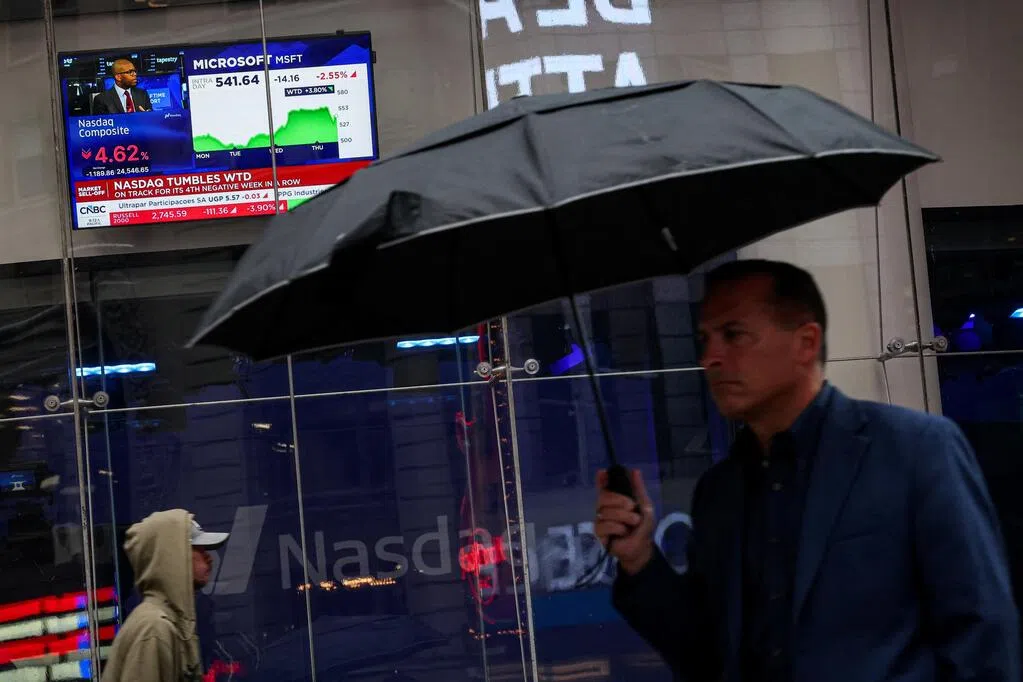
The global financial landscape experienced a period of intense volatility this week as a wave of panic selling in technology shares, triggered by the fallout from the United States midterm elections, migrated from Wall Street to the major trading hubs of Asia. On Friday, November 6, the contagion manifested in sharp declines across Tokyo and Seoul, signaling a broader market anxiety regarding the future of the artificial intelligence (AI) boom.
In South Korea, the situation reached a critical point when the KOSPI index suffered a staggering 8.5% plunge. The volatility was so severe that it triggered a market-wide circuit breaker, forcing the Korea Exchange to implement an emergency 20-minute trading halt to curb the freefall. Similarly, Japan's Nikkei 225 index was not spared, sliding 5.1% in early trading as investors reacted to the instability originating from the West.
This Asian downturn was a direct echo of the carnage witnessed on Thursday in the United States. The Nasdaq Composite index closed the session with a steep 5.5% loss, resulting in a staggering evaporation of approximately $2.5 trillion in market capitalization. The impact was most acutely felt among the "Magnificent Seven"—the group of elite tech giants including Apple, Nvidia, and Tesla—who collectively saw their market value shrink by $1 trillion in a single trading day.
Industry analysts point out that the semiconductor sector, which serves as the backbone of the AI revolution, has been the hardest hit due to its heavy reliance on the US ecosystem. In South Korea, high-end memory chip makers essential for AI hardware saw their valuations crater; Samsung Electronics plummeted nearly 10%, while SK Hynix experienced an even sharper drop of over 11%. The trend continued in Japan, where Tokyo Electron fell roughly 9% and Kioxia Holdings suffered a brutal 13% decline.
According to a report from the Japanese online brokerage Monex, the primary catalyst for this exodus is the fear of regulatory tightening. The victory of the Democratic Party in the midterm elections has shifted market sentiment. While the initial announcement of the results was met with some optimism, that feeling quickly soured as traders began to speculate that a Democratic-led administration would impose stricter oversight and more rigorous regulations on the development and deployment of AI technologies.
For months, the market had priced in a period of aggressive, unchecked AI expansion. However, the prospect of a regulatory crackdown in Washington has introduced a significant layer of risk. Investors now fear that the "economic engine" of AI investment could be stalled by political intervention, leading to a re-evaluation of the valuations of companies that have seen their stock prices soar on AI hype alone. This shift in sentiment suggests that the market is now entering a phase of extreme sensitivity to political shifts, where the perceived balance between innovation and regulation could dictate the flow of trillions of dollars in global capital.