Endangered Dusky Shark 'Bukangi' Returns to the Wild After Captivating Millions in Busan
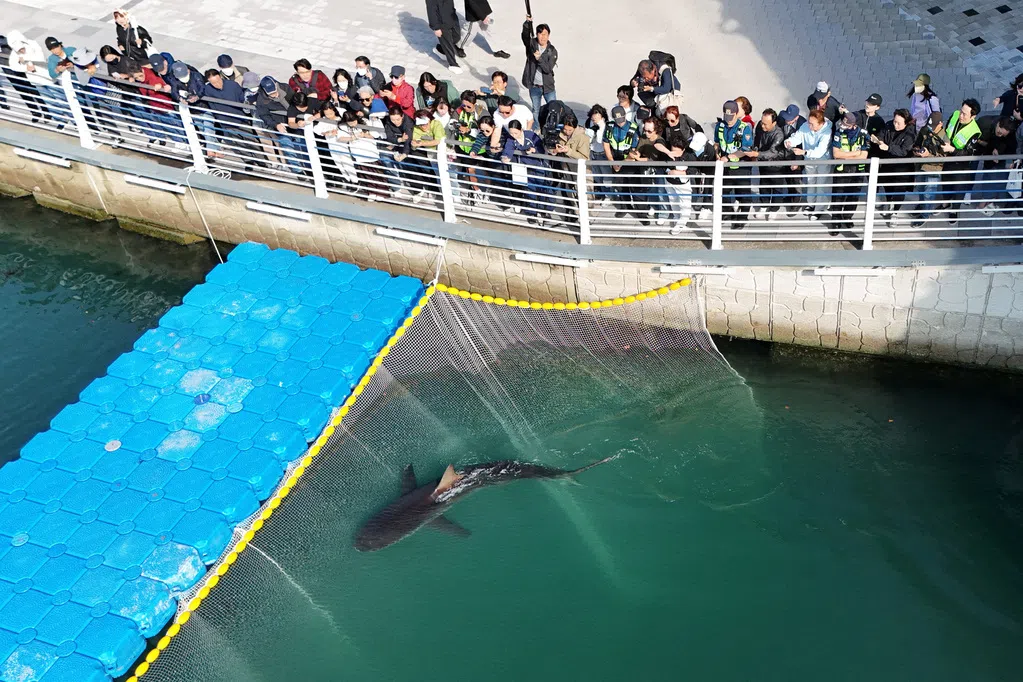
In a dramatic conclusion to a month-long urban odyssey, an endangered dusky shark that had turned the industrial waterways of Busan into an unlikely tourist attraction was successfully returned to the Pacific Ocean this Wednesday. The marine animal, which the local public had affectionately dubbed 'Bukangi,' had become a symbol of unexpected wonder amidst the cityscape of South Korea's second-largest city.
The saga began on September 18, when the shark first wandered into the narrow confines of the North Port canal. The sight of a large marine predator cruising through a waterway flanked by towering skyscrapers and the bustling Busan Station—a major hub for high-speed rail—created a surreal contrast that quickly went viral. According to data provided by the Busan Infrastructure Corporation, the shark's presence triggered a massive surge in tourism, with over 1.6 million people visiting the adjacent waterfront parks by October 20, hoping to catch a glimpse of the elusive visitor.
Marine biologists from the National Institute of Fisheries Science identified the creature as a female dusky shark, measuring approximately three meters in length. These sharks are typically found in tropical and subtropical waters and are currently classified as an endangered species by the International Union for Conservation of Nature (IUCN). The presence of such a rare animal in a restricted urban canal raised immediate concerns regarding the shark's health and its ability to find food and navigate back to deep waters.
The journey to liberate 'Bukangi' was fraught with technical challenges. The first rescue attempt took place on September 29, during which authorities deployed vessels equipped with water-spraying devices. The goal was to create an unsettling environment that would encourage the shark to swim toward the ocean. However, the shark proved resilient, swimming away from the noise but remaining within the confines of the canal.
Determination grew on October 2, when a more aggressive strategy was implemented. Rescue teams deployed a massive fishing net, measuring 50 meters in length and 6.8 meters in height. The operation ended in frustration when the heavy equipment became snagged on the jagged rocky bed of the canal, forcing the team to terminate the mission to avoid further stressing the animal or damaging the equipment.
Finally, on Wednesday, October 21, a third and more sophisticated operation was launched. Learning from previous failures, the Ministry of Oceans and Fisheries coordinated a strategy using nets fixed to floating platforms. This method allowed for greater control and flexibility in the face of the canal's varying depths and complex bottom topography. To ensure precision, professional divers were deployed into the water to guide the shark, while a fleet of drones provided a real-time 'eye in the sky,' tracking the shark's every movement to prevent it from retreating back into the narrow channels.
By gradually pushing the nets toward the open sea and blocking all paths leading back into the city, the team successfully ushered the dusky shark out of the North Port. The successful operation brought a wave of relief to both the environmentalists and the millions of citizens who had followed the story with bated breath. The return of 'Bukangi' to the wild marks a victory for marine conservation and a memorable chapter in the history of Busan's waterfront.