Escalating Border Tensions: Seoul Warns Pyongyang Against Military Provocations in the DMZ
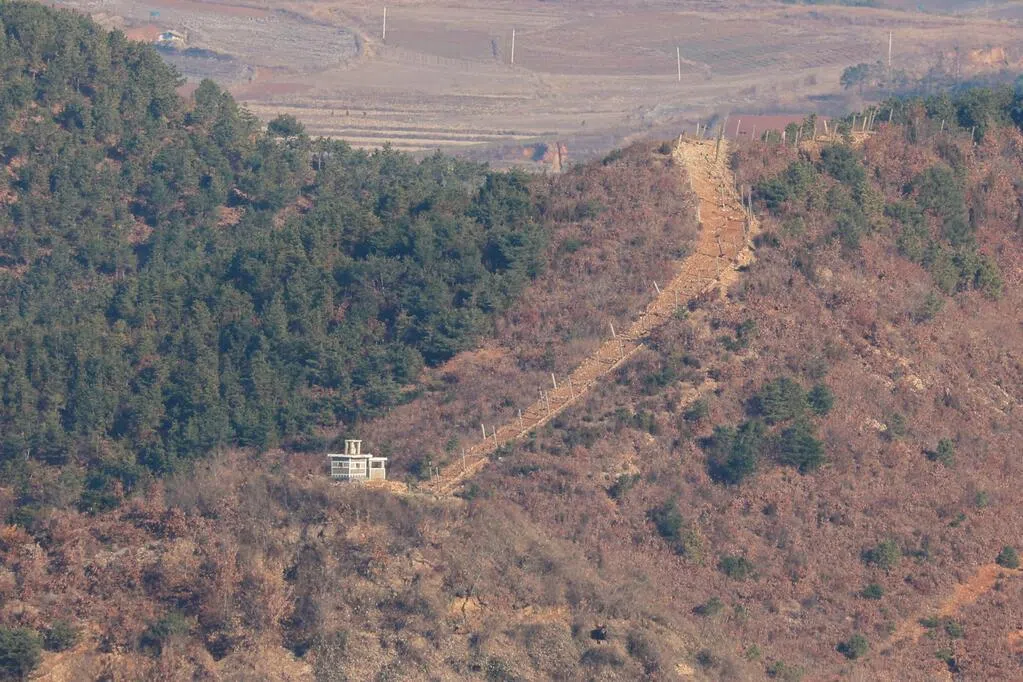
The fragile peace along the 38th parallel has once again been pushed to the brink as North and South Korea engage in a dangerous cycle of rhetoric and military posturing. In a series of escalating events, the South Korean Ministry of National Defense has issued a sharp warning to Pyongyang, stating that any attempt to translate recent threats into military action will be met with a severe and decisive response.
The current spike in tension was triggered by statements from Kim Yo Jong, the sister of North Korean leader Kim Jong Un and a high-ranking official in the Workers' Party. Kim Yo Jong alleged that South Korea has engaged in aggressive psychological warfare, claiming that between August 1 and October 17, Seoul conducted 2,870 loudspeaker broadcasts and fired 201 warning shots near the border. Pyongyang views these activities as direct threats to the safety and stability of North Korean personnel stationed along the Military Demarcation Line (MDL), suggesting that they may respond by deploying tactical strike weapons and resuming their own propaganda broadcasts.
Seoul, however, has flatly rejected these accusations. The South Korean Ministry of National Defense maintains that the use of loudspeakers and warning shots is not an act of aggression, but rather a set of "justified self-defense measures." According to the ministry, these protocols are essential to prevent North Korean soldiers from crossing the MDL and to compel any intruders to retreat immediately. The ministry urged Pyongyang to cease its groundless rhetoric and stop violating the border, calling for a diplomatic approach to resolve the lingering disputes regarding the demarcation line.
Beyond the diplomatic exchange, the situation has manifested in tangible military movements. General Chen Yong-seung, Chairman of South Korea's Joint Chiefs of Staff, recently conducted a high-profile inspection of the front-line Army Command. During this visit, General Chen reviewed the current state of combat readiness and issued direct orders to execute military operations designed to strengthen South Korea's dominance within the Demilitarized Zone (DMZ). He emphasized that the South Korean military would not tolerate the distortion of their defensive operations into "provocations," nor would they allow North Korea to shift the responsibility for the escalating tension onto Seoul.
Regional security experts are viewing these developments with profound concern, noting that the margin for error in the DMZ is razor-thin. Hong Min, a senior researcher at the Korea Institute for National Unification, pointed out that the danger lies in the disparity between the two nations' rules of engagement. If North Korea's internal threshold for what constitutes a provocation is lower than South Korea's existing operational procedures, then the mere repetition of standard defensive measures could be enough to trigger a full-scale conflict.
Adding to this fear is the possibility of tactical misinterpretation. Michael Bosack, founder of the Parley Policy Institute and a former official at the UN Command, warned that the environment is ripe for a catastrophic misunderstanding. He noted that front-line troops, under extreme stress, might perceive a warning shot—intended to deter an intruder—as an actual attack that simply missed its mark. Such a miscalculation could lead to immediate retaliatory fire, sparking a rapid escalation that neither side may have initially intended. As both nations dig in their heels, the peninsula remains in a state of high alert, where a single spark could potentially ignite a larger confrontation.