US Treasury Secretary Bessent Warns Global Powers: Support Economic Isolation of Iran or Face Adversity
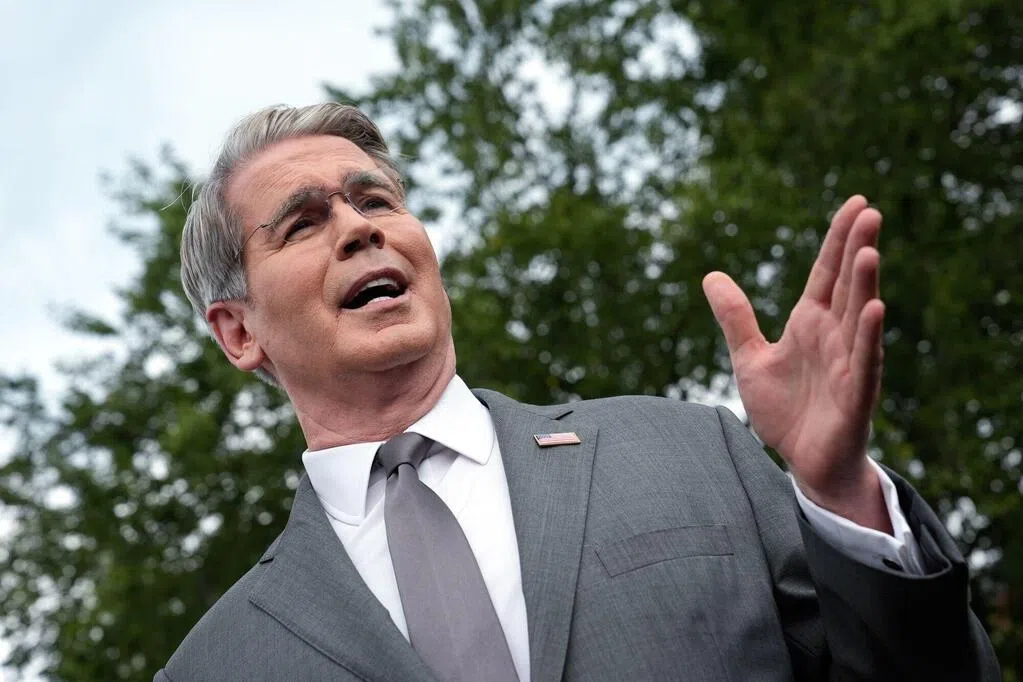
In a move that signals a dramatic shift in United States foreign policy, Treasury Secretary Bessent has delivered a stark ultimatum to both American allies and global competitors, including China. During a recent appearance on CNBC, Bessent articulated a strategy of total economic isolation aimed at the Islamic Republic of Iran, stating that the international community must either support the United States in its effort to dismantle the government in Tehran or risk being viewed as adversaries of Washington.
This aggressive stance marks a strategic pivot for the Trump administration. After nearly six months of a conflict that has faced significant domestic and international scrutiny, the White House appears to be transitioning its primary lever of pressure from military engagement to economic warfare. Bessent expressed confidence in this approach, suggesting that comprehensive financial strangulation would be the most effective method to achieve a regime change in Iran. He emphasized that the goal is not merely to pressure the leadership but to fundamentally undermine the current political structure of the Iranian state.
President Trump has further amplified this rhetoric, describing the upcoming measures as an "economic Normandy landing." In a series of posts on his social media platform, Truth Social, the President lamented that the Iranian government failed to seize an opportunity for a diplomatic agreement. Consequently, he announced the launch of what he termed the "most devastating economic action" in history. Trump's vision is a total blockade, asserting that Iran's military infrastructure—including its navy and air force—has already been severely compromised, leaving the nation in a precarious position. He explicitly warned that any government, financial institution, or commercial entity providing a "lifeline" to Iran, whether through banking services or airport access, would face severe economic penalties.
This "maximum pressure" campaign is not without domestic drivers. With the U.S. midterm elections approaching, the administration is under significant pressure to show tangible results and strength in its foreign policy. The proposed coordinated isolation is intended to be the largest of its kind in global history, forcing a binary choice upon the world: total alignment with the U.S. strategy or facing the consequences of defiance.
When questioned regarding the specific pressure being applied to Beijing, Secretary Bessent remained guarded, noting that many of these high-level diplomatic conversations are best conducted in private. However, he made it clear that the U.S. expects China to join the coalition of isolation. This tension is expected to reach a peak during the upcoming visit of Chinese President Xi Jinping to the White House on September 24, where the Iranian crisis will undoubtedly be a central point of contention, mirroring the geopolitical frictions seen during previous diplomatic encounters.
Interestingly, Bessent suggested that the implementation of this extreme economic warfare might actually lower the immediate probability of resuming large-scale military operations. By shifting the battlefield to the global financial system, the U.S. seeks to achieve its objectives without the direct casualties associated with traditional warfare. However, he cautioned that this shift is dependent on the current situation and remains subject to change based on Tehran's reactions.
Further details regarding the specific mechanisms of these economic sanctions and the scope of the isolation campaign are expected to be unveiled during a formal press conference scheduled for August 24. The global community now awaits the specifics of a plan that threatens to redraw the lines of international trade and diplomacy in the pursuit of dismantling a sovereign regime.