Pyongyang Escalates Regional Tension with Rapid-Fire Ballistic Missile Tests
### Pyongyang Signals Defiance via Strategic Missile Barrage
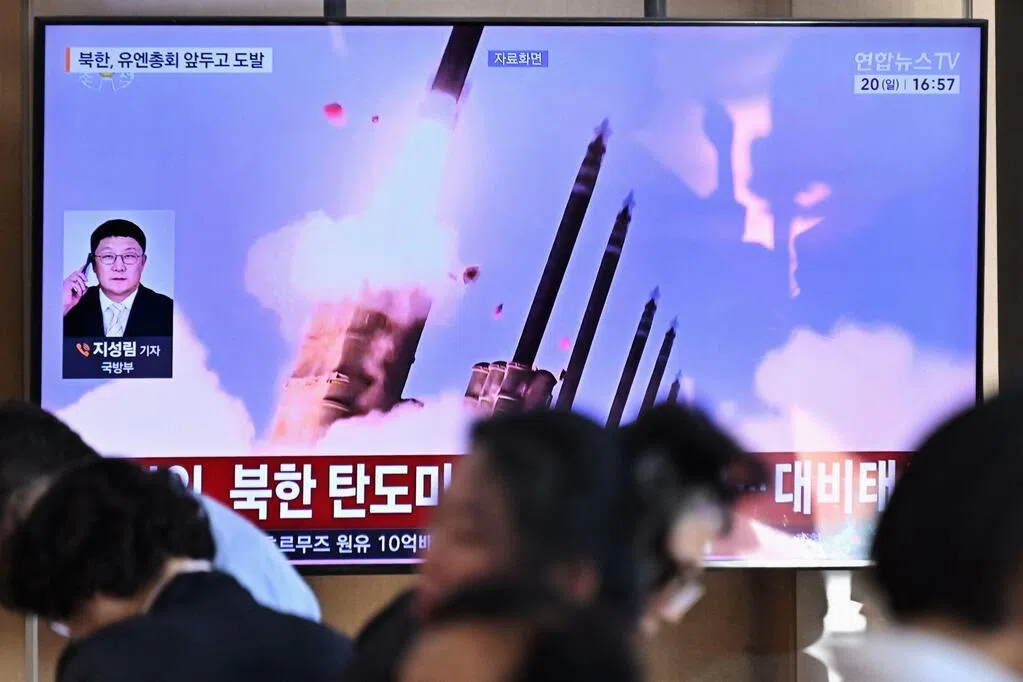
In a calculated display of military strength, North Korea executed two separate short-range ballistic missile (SRBM) launches into the waters of the East Sea on Sunday, September 20. The launches occurred within a narrow three-hour window, marking a rare instance of such rapid-fire demonstrations of force. This military activity underscores a period of heightened volatility on the Korean Peninsula, coming just 48 hours after high-level warnings from the North Korean leadership regarding international military cooperation.
#### The Mechanics of the Provocation
According to reports from South Korea's Joint Chiefs of Staff, the first projectile was detected around 3:00 PM, launched from the Wonsan area in Gangwon Province. This initial missile traveled approximately 450 kilometers. Shortly thereafter, at roughly 5:50 PM, a second missile was launched from the same region, achieving a significantly longer flight distance of over 600 kilometers.
While North Korea has conducted various tests in the past, the specific timing and frequency of these two launches are seen as atypical. Although Pyongyang performed mixed-weapon drills on September 12—utilizing a combination of cruise missiles, multiple rocket launchers, and suicide drones—the recent Sunday activity focused specifically on ballistic capabilities, suggesting a desire to showcase precision and reliability in its SRBM arsenal. Intelligence agencies from both Seoul and Washington are currently analyzing the flight trajectories and altitudes to determine the specific technical specifications of the missiles used.
#### Geopolitical Triggers and Strategic Warnings
Analysts suggest that these launches are not isolated incidents but are direct reactions to the "Pacific Guardian" multilateral military exercises led by the United States. On September 18, Kim Yo Jong, the powerful sister of leader Kim Jong Un, issued a stern warning that Pyongyang would be forced to take "proportional or even more aggressive" actions in response to such joint maneuvers. By executing the launches shortly after her statement, the North Korean regime is attempting to signal that its rhetoric is backed by operational readiness.
Furthermore, this activity follows a three-day intensive tour by Kim Jong Un, who visited several defense industries between September 16 and 18. During these inspections, the leader focused on the production of multiple rocket launchers and drones, as well as the integration of artificial intelligence into weapon systems. This suggests a dual-track strategy: continuing the development of nuclear deterrents while simultaneously modernizing conventional warfare capabilities to maintain a tactical advantage.
#### The Nuclear Impasse and International Fallout
The missile tests also coincide with a deepening diplomatic rift between Pyongyang and the international community. On September 17, the International Atomic Energy Agency (IAEA) passed a resolution reaffirming that North Korea does not possess the legal status of a nuclear-weapon state. In a swift retort, Kim Yo Jong declared that the country's nuclear status is "irreversible" and emphasized that strengthening nuclear reliability is the paramount priority for national security.
Professor Yang Mu-jin of the North Korean Research Institute noted that these maneuvers are designed to prove that the regime's warnings are not empty threats. By targeting the East Sea, Pyongyang is effectively demonstrating its capability to strike key installations of the South Korean military and U.S. forces stationed in the region.
#### Regional Response and Security Implications
The response from Seoul was immediate and severe. The National Security Office of the South Korean presidential office convened an emergency meeting to address the crisis. Official statements condemned the launches as a "grave violation" of United Nations Security Council resolutions, which strictly prohibit North Korea from conducting ballistic missile tests.
As tensions remain high, South Korean military authorities have declared a state of heightened vigilance, asserting that they will closely monitor all movements from the North and remain prepared to respond to any further provocations with decisive action. The situation highlights a dangerous cycle of provocation and reaction, with the risk of miscalculation increasing as Pyongyang continues to tie its national security to the expansion of its missile program.