Prime Minister Burnham Signals Potential Shift in UK-EU Migration Policy
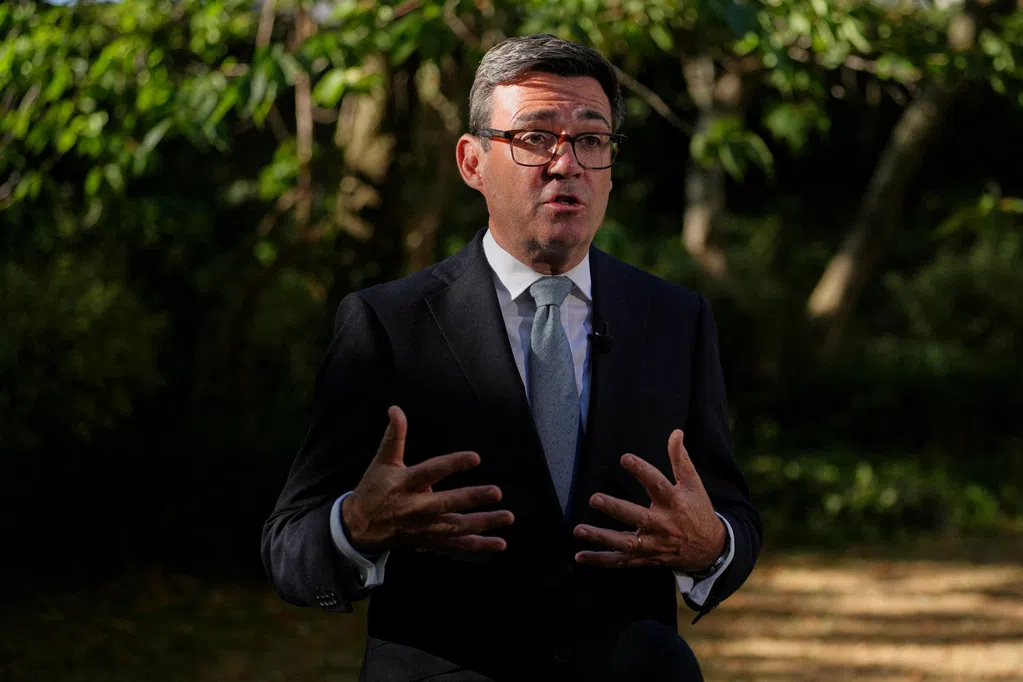
In a move that could signal a fundamental shift in the United Kingdom's post-Brexit trajectory, Prime Minister Burnham has indicated an openness to reconsidering the free movement of personnel from the European Union. This revelation, first detailed in a report by the Sunday Times and cited by AFP, suggests that the British government may be preparing the public for a more integrated relationship with its continental neighbors, despite the political sensitivities surrounding the 2016 referendum.
During his recent remarks, Burnham emphasized that the nature of migration has evolved significantly since the UK formally exited the European Union in 2020. He pointed out that the 'circular migration' patterns of the past—where workers would move to the UK for a period and then return to their home countries—have largely vanished under the current restrictive regime. According to the Prime Minister, the overall landscape of immigration has shifted so drastically that the nation can no longer afford to ignore the economic and social implications of these changes. He argued that a transparent and honest discussion regarding the future of immigration policy is now an absolute necessity for the country's growth.
Since taking office in July, Burnham has been cautiously exploring ways to mend the often-strained relationship between London and Brussels. He has previously mentioned the possibility of the UK applying to rejoin the EU in the future, and he has pledged to present various frameworks for improving bilateral ties during the upcoming UK-EU summit in Brussels. However, the Prime Minister finds himself in a complex political position. He has reaffirmed his commitment to the campaign promises made by his predecessor, Keir Starmer, during the 2024 general election. Specifically, this means that for the immediate future, the government will not restore the free movement of people, nor will it seek re-entry into the European Single Market or the Customs Union.
This political constraint implies that any sweeping changes to the UK's fundamental relationship with the EU would likely require a fresh mandate from the electorate. Analysts suggest that Burnham may be laying the groundwork for a policy pivot that would be officially pursued during the next general election, tentatively expected in 2029. To further clarify his boundaries, the Prime Minister explicitly stated that he would not advocate for the UK to join the Eurozone or the Schengen Area, indicating that while he seeks closer cooperation, he is not pursuing a total erasure of Brexit.
The Prime Minister's suggestions have not been met without fierce opposition. Nigel Farage, the leader of the anti-immigration Reform Party, has been vocal in his condemnation, labeling Burnham's openness to restoring free movement as a 'complete betrayal' of the democratic will of the people who voted for Brexit. The tension between the desire for economic fluidity and the commitment to sovereign border control remains a central fault line in British politics.
Looking forward, the immediate focus shifts to the summit scheduled for November 20. British and EU leaders are expected to engage in intense negotiations to reach agreements on several critical fronts. Key agenda items include the facilitation of trade in food and beverages, the creation of new frameworks for youth mobility, and the alignment of carbon emission trading schemes. These discussions will serve as a litmus test for whether the UK and EU can move past the animosity of the divorce era and establish a pragmatic partnership based on mutual economic interest.