Sydney’s New A$5.6 Billion Airport Launches Amid Fears of Low Traffic and Logistics Hurdles
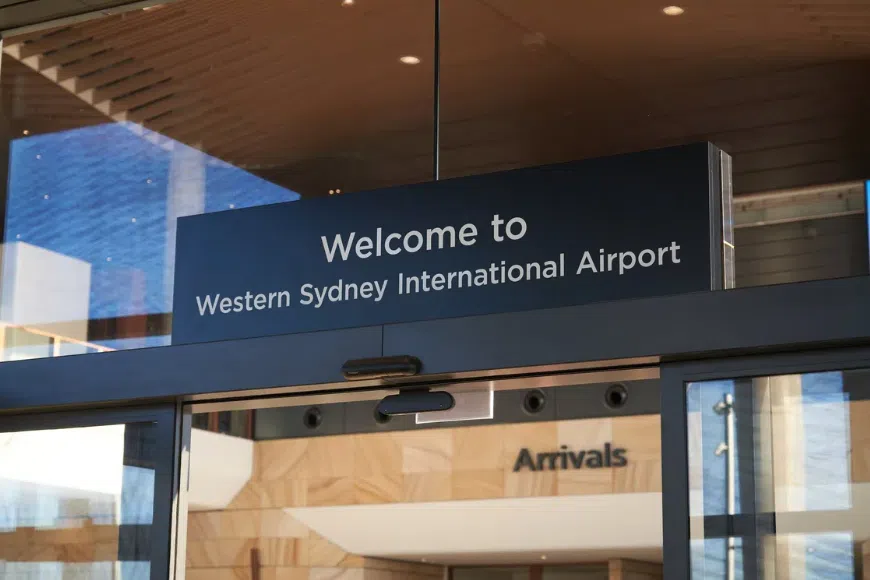
After more than half a century of bureaucratic inertia, environmental disputes, and chronic funding shortages, Sydney is finally expanding its aviation footprint with the opening of its second major airport. However, the Western Sydney International Airport, a project boasting a staggering A$5.6 billion price tag, is stepping into a volatile market where its commercial viability is being questioned before the first passenger even boards.
Scheduled to welcome its inaugural passenger flight this coming Sunday, October 25, the airport will begin its operations with a Jetstar service bound for the Gold Coast. While the event marks a historic milestone for Australian infrastructure, the numbers behind the launch suggest a slow start. According to data from aviation analytics firm Cirium, the airport has struggled to lure a wide array of carriers. For the first year of operation, the daily flight schedule is alarmingly thin, with some days seeing six flights or fewer.
Currently, the list of confirmed operators includes Qantas and its low-cost subsidiary Jetstar, alongside international players such as Air New Zealand, Vietjet Aviation, Fiji Airways, and Singapore Airlines. Notably absent is Virgin Australia, the nation's second-largest carrier. In an official statement, Virgin indicated that it is still evaluating whether the new airport aligns with its existing network and customer needs, reflecting a cautious approach prevalent across the industry.
The road to completion has been arduous. While the site at Badgerys Creek was finally confirmed in 2014—ending a debate that had raged since 1946—construction only began in 2018. Although cargo operations commenced in July of this year, the passenger terminal opens at a time when the global aviation sector is grappling with significant headwinds. Geopolitical instability, particularly tensions involving Iran, has dampened global economic confidence and sent warnings of rising fuel costs and ticket prices. Consequently, several airlines are scaling back domestic capacity rather than expanding into new, unproven hubs.
Adding to these pressures is a global shortage of aircraft. Delivery delays from major manufacturers have left airlines with little to no spare capacity to allocate to a new airport where passenger demand remains an unknown variable.
Beyond the aviation logistics, the airport faces a daunting connectivity crisis. The project is hindered by a lack of integrated public transport; the dedicated rail link is not expected to be operational until 2027. In the interim, passengers wishing to reach the Sydney central business district must rely on shuttle buses that cost approximately A$55 per ticket and take over an hour to navigate the distance. This creates a stark contrast with the existing Sydney Kingsford Smith Airport, which is situated just 20 minutes from the CBD and remains the far more practical choice for the vast majority of travelers.
Industry academics have expressed skepticism regarding the airport's ambitious growth targets, which project 8.4 million passengers by 2030 and nearly 20 million by 2045. Professor David Levinson of the University of Sydney suggests that these forecasts are overly optimistic, arguing that the airport is essentially attempting to serve a market that does not yet exist.
Similarly, Peter Forsyth, a former Monash University professor and aviation consultant, warned that Western Sydney International risks becoming a 'white elephant,' citing the example of Melbourne's Avalon Airport. Despite being operational since 2004, Avalon has never truly succeeded in challenging the dominance of Melbourne's primary airport. Forsyth suggests that while there is a latent demand for a second hub in Sydney, the realization of that potential will be a painfully slow process, leaving the airport's immediate future shrouded in uncertainty.