Trump Stands Firm on Iran Strategy Despite Republican Loss of Congressional Control
### Defiance in the Face of Political Setbacks
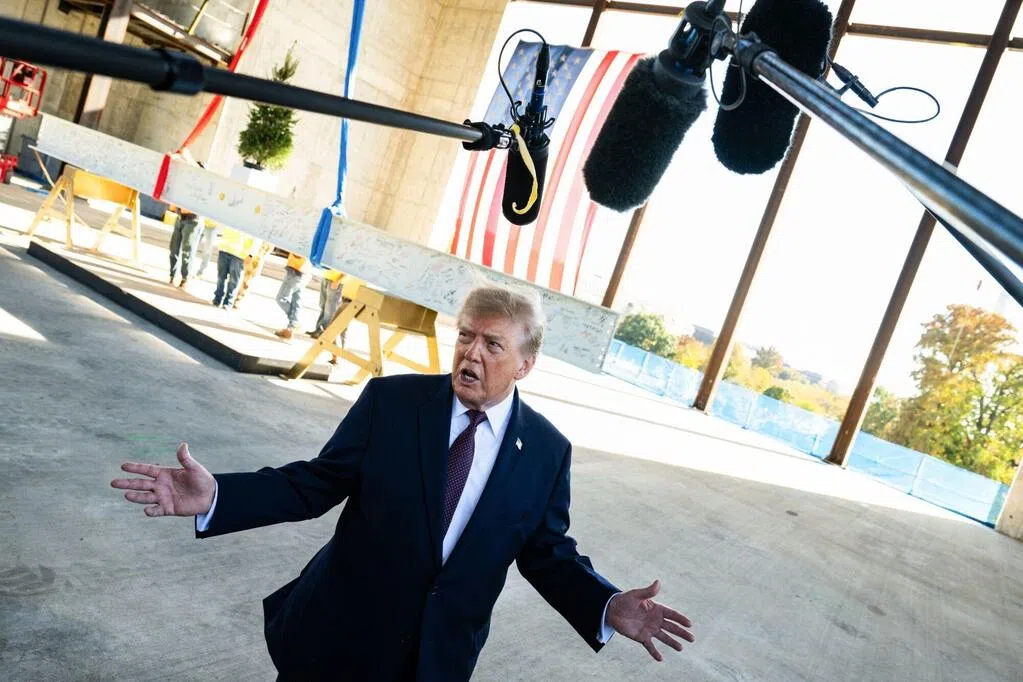
In a pointed display of resolve, President Donald Trump has signaled that he will not pivot his foreign policy, even as the Republican Party suffers a significant political blow. Speaking to reporters in Washington on Wednesday, November 4, the President addressed the fallout from the recent elections, during which Republicans lost their grip on the halls of Congress. Despite the clear electoral signal, Trump remained steadfast, asserting that the ongoing military engagement with Iran was not only justified but entirely necessary.
"Regarding Iran, we must take action, and we are continuing to do so," Trump stated, framing the conflict as an inevitable confrontation. The core of his argument rests on the strategic imperative of preventing Tehran from acquiring nuclear capabilities. In his view, the long-term security of the region and the United States outweighs the short-term political volatility sparked by the conflict. He made it clear that his determination remains unshaken, stating that the decisions he made regarding the war will not be altered by the outcome of the polls.
### The Economic Cost and the 'Blue Wave'
The political landscape shifted dramatically as Democratic candidates capitalized on a key vulnerability: the American consumer's wallet. The escalation of tensions in the Middle East led to a sharp increase in global oil prices, which manifested as soaring gasoline costs at pumps across the United States. Political analysts suggest that this economic pressure was a primary catalyst for the Democratic sweep of both the House and the Senate, as voters shifted their focus toward the immediate burden of living costs.
This sentiment was echoed internally within the administration. Vice President JD Vance provided a candid assessment via social media, explicitly linking the GOP's electoral failure to the war. Vance suggested that the conflict had become a political liability that the party could no longer ignore. However, Trump dismissed the notion that the policy itself was a failure, arguing instead that the failure lay in the inability of other Republican candidates to leverage his personal popularity.
### The Paradox of Personal Popularity
Trump offered a unique interpretation of the election results, suggesting a disconnect between his own standing with the electorate and that of his party's candidates. He noted that while his campaign rallies were characterized by an "incredible fervor" and overwhelming support, this energy failed to transfer to the down-ballot candidates.
"The problem is that that enthusiasm cannot be transferred," Trump remarked. He maintained the belief that if he had been the sole focus of the ballot, the result would have been a victory. This perspective suggests that the President views the loss of Congress not as a rejection of his policies, but as a failure of the Republican brand to mirror his personal magnetism in the eyes of the voters.
### Loyalty to the Hardline Approach
Beyond the political calculations, Trump reaffirmed his commitment to his military leadership. Secretary of War Hegseth, a key architect and staunch supporter of the aggressive posture toward Iran, faced speculation regarding his job security following the election results. Many critics argued that a change in leadership was necessary to signal a shift toward diplomacy and stabilize domestic gas prices.
However, Trump explicitly ruled out the possibility of removing Hegseth. When pressed on whether he would consider a change in personnel, the President was emphatic in his support, stating that Hegseth has performed his duties exceptionally well. By maintaining Hegseth in his position, Trump is sending a clear message to both domestic critics and foreign adversaries: the United States will continue its hardline trajectory toward Tehran, regardless of the shift in legislative power. This commitment suggests that the administration is prepared to weather a period of intense friction with a Democratic-led Congress to achieve its geopolitical objectives in the Middle East.