South Korea, US, and Japan Launch 'Freedom Edge' Multi-Domain Drills to Counter Regional Threats
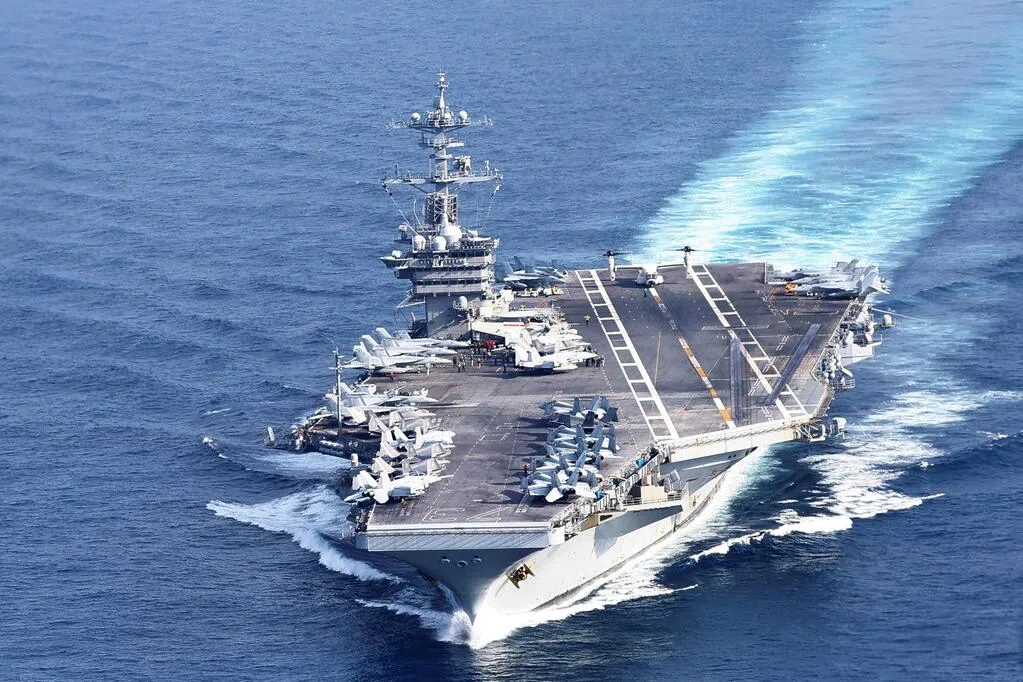
Starting Monday, September 7, the trilateral security alliance comprising South Korea, the United States, and Japan has initiated a high-intensity joint military exercise dubbed "Freedom Edge." The maneuvers are currently taking place in the international waters located to the east and south of Jeju Island, South Korea, and are scheduled to continue through September 11. This operation marks a significant step in the deepening of military cooperation among the three nations, moving beyond bilateral agreements toward a more cohesive trilateral defense strategy.
According to reports from the South Korean Joint Chiefs of Staff (JCS), the exercise is designed to integrate a wide array of maritime and aerial combat capabilities. The scale of the deployment is substantial, with a total of six warships participating alongside various specialized aircraft. From the South Korean side, the navy has deployed two heavyweight Aegis destroyers: the 7,600-ton Seoyae Ryu Seong-ryong and the Yulgok Yi I. These vessels are central to South Korea's missile defense architecture, providing a sophisticated shield against potential aerial incursions.
Japan has similarly committed significant assets to the drill. The Japanese Maritime Self-Defense Force has deployed the Atago-class Aegis destroyer (7,700 tons) and the Asahi-class destroyer (5,100 tons). To bolster the aerial dimension of the operation, Japan has also deployed P-1 maritime patrol aircraft, SH-60K helicopters, and F-15 fighter jets, ensuring that the exercise covers a broad spectrum of reconnaissance and strike capabilities.
From the American side, the USS Benfold, an Aegis destroyer of approximately 6,900 tons, is expected to join the maneuvers after a recent port call in Busan. While the US presence is significant, observers note that a US aircraft carrier is expected to be absent for the second consecutive year, suggesting that the focus of this particular iteration is on agile, multi-domain coordination rather than massive power projection.
Strategically, the "Freedom Edge" exercise is the operational realization of the agreement reached during the 2023 Camp David summit. At that historic meeting, the leaders of the three nations pledged to institutionalize their security cooperation, agreeing to hold these multi-domain drills on an annual basis starting in 2024. The objective is to create a seamless operational environment where the three militaries can communicate and act in unison across the sea, air, and cyberspace.
The South Korean JCS emphasized that these drills are routine and defensive in nature, conducted in full compliance with international law and norms. The primary driver behind the increased frequency and complexity of these exercises is the persistent threat posed by North Korea's advancing nuclear and missile programs. By refining their joint response capabilities, the three nations aim to create a credible deterrent that discourages aggression and safeguards the peace and stability of the Indo-Pacific region.
Beyond the hardware, the "multi-domain" aspect of the exercise is critical. It involves not only the physical movement of ships and jets but also the synchronization of data links and cyber defense protocols. This ensures that if a real-world crisis emerges, the trilateral forces can share intelligence in real-time and execute a coordinated counter-strategy without the friction of incompatible systems. This integration is seen as a cornerstone of the new security architecture intended to maintain a free and open Indo-Pacific.