Kyiv Under Siege: Russian Aerial Bombardment Intensifies Amid High-Level Peace Maneuvers
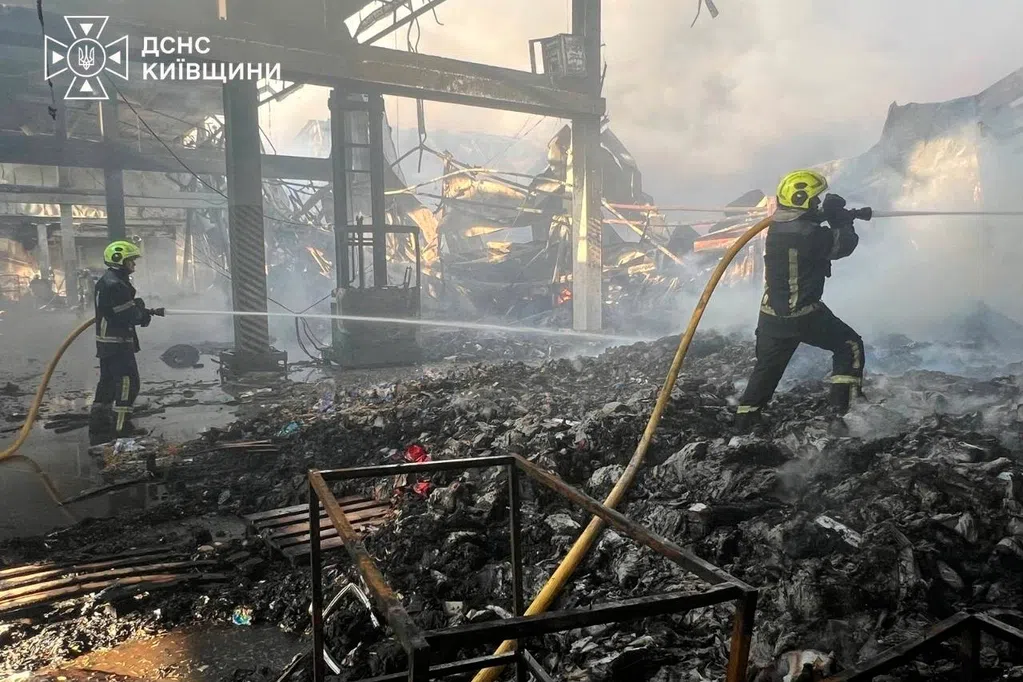
The Ukrainian capital, Kyiv, and its surrounding territories have become the epicenter of a brutal aerial campaign as Russian forces continued their relentless bombardment on Tuesday, September 1. This latest wave of aggression marks the sixth consecutive day that the metropolitan area has been targeted, reflecting a strategic intensification of Russia's air operations against civilian and administrative hubs.
According to reports from Kyiv's emergency services, the devastation within the city limits was severe. At least eight individuals were confirmed dead, while dozens more were left injured. The strikes triggered multiple large-scale fires across the city, complicating rescue efforts and leaving the urban landscape shrouded in smoke. Among those wounded in the capital are three children, highlighting the ongoing toll the conflict is taking on the most vulnerable populations of Ukraine.
The violence extended beyond the city center into the broader Kyiv region. The administrative head of the Kyiv region, Tkachenko, provided a grim update from the city of Boryspil, where the casualties continued to mount. Four more deaths were reported, and thirteen people were injured, including a child. The strikes in Boryspil were particularly destructive, with missiles and unmanned aerial vehicles (UAVs) striking a residential apartment complex and a commercial facility, reducing structures to rubble and displacing residents.
Adding to the tragedy, President Volodymyr Zelenskyy revealed that the overnight onslaught claimed the life of a foreign national, specifically an Indian citizen. This detail underscores the international dimension of the casualties resulting from the conflict, as foreign residents and workers find themselves caught in the crossfire of the escalating hostilities.
While the sirens continued to wail across much of Ukraine in the early hours of Tuesday, President Zelenskyy was simultaneously pivoting toward diplomatic channels to seek a resolution to the bloodshed. On Monday, August 31, the Ukrainian leader engaged in high-level telephonic discussions with Witkoff, a special US envoy, and Jared Kushner. The primary objective of these conversations was to finalize the dates for a visit to Ukraine. These diplomatic overtures are seen as a critical attempt to push the peace process forward, leveraging connections with key figures in the United States to establish a viable framework for ceasefire and stability.
However, the conflict is not a one-way street of aggression. The Russian capital, Moscow, also experienced tensions as the city's mayor, Sobyanin, announced that Russian air defense systems had successfully intercepted more than ten drones attempting to enter the airspace over the city. The volatility further extended to Russia's internal provinces, with reports indicating that the Samara region was targeted in an air raid, leading to damage at several civilian facilities.
Analysts suggest that this surge in violence on both sides may be an attempt to gain leverage before potential negotiations. The timing of the airstrikes on Kyiv, coinciding with Zelenskyy's efforts to coordinate with US representatives, suggests a tactical push by the Kremlin to project power and destabilize the Ukrainian administration. Meanwhile, the Ukrainian strikes on Russian soil, such as in Samara, signal a determination to hold Moscow accountable for the destruction of Ukrainian cities. As the humanitarian crisis deepens and diplomatic wheels turn slowly, the residents of Kyiv remain in a state of perpetual alarm, caught between the hope for peace and the reality of falling missiles.