Spain Mourns as High-Speed Rail Disaster Claims 69 Lives Amidst Safety Strikes
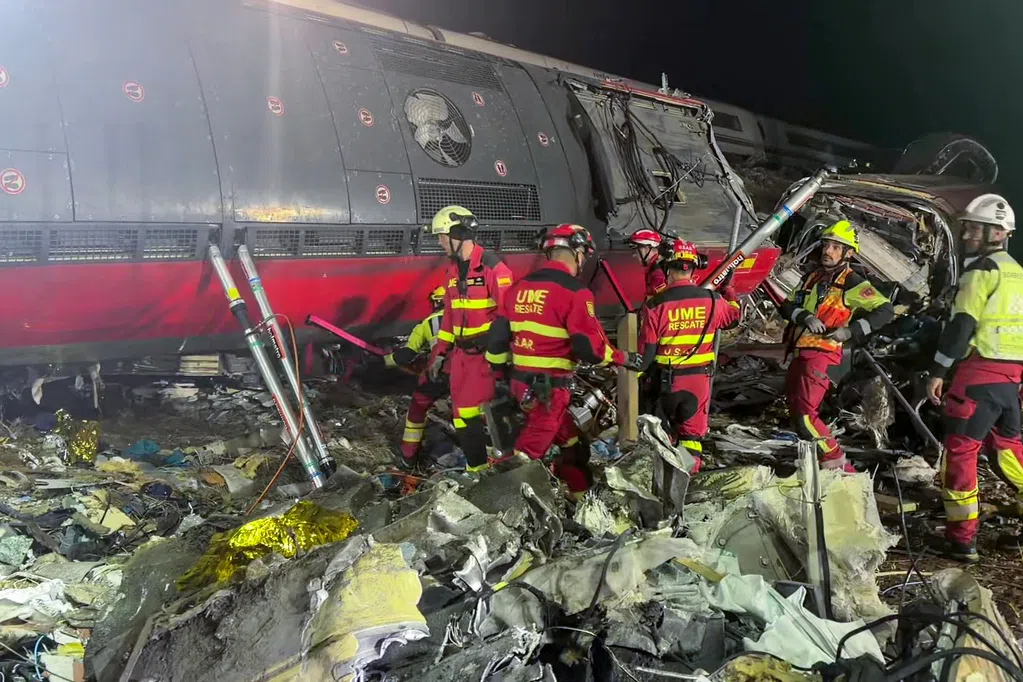
The Spanish nation has been plunged into a state of profound grief following a devastating high-speed rail collision in the province of Toledo, where the death toll has now climbed to 69. The accident, which occurred on Wednesday, October 28, has exposed critical vulnerabilities in the country's rail infrastructure, triggering both a humanitarian crisis and a labor uprising among railway professionals.
In the immediate aftermath of the crash, the scene in central Spain was one of absolute chaos. Images released by the Spanish National Guard depict a haunting sight: train carriages twisted into unrecognizable shapes of steel and glass. Rescue teams worked tirelessly through the night and into Thursday, employing heavy-duty cranes to lift massive wreckage and clear a path for search teams. Despite the grueling efforts of first responders, the hope of finding more survivors has dwindled as the focus shifted toward recovering the bodies of those trapped within the mangled remains of the carriages.
Currently, the tragedy has left a significant number of casualties, with 57 injured passengers remaining under medical care in local hospitals. Garcia-Pacheco, the President of the Castile-La Mancha region, confirmed that the discovery of additional bodies during the overnight search led to the revised death toll. While officials believe that most victims have been recovered, they remain cautious as search operations continue to focus on one particularly badly overturned carriage.
To manage the crisis, the Spanish Ministry of the Interior mobilized a massive relief operation. More than 800 security personnel, including military and police forces, were deployed to the site, supported by over 200 vehicles, three helicopters, and a fleet of drones and search-and-rescue dogs. To ensure the integrity of the investigation and the safety of the operation, a judge in Toledo established a strict exclusion zone extending two kilometers in both directions from the crash site, barring all non-essential personnel from the area.
The tragedy has also taken on an international dimension. The Spanish Ministry of Foreign Affairs reported that 42 foreign nationals from seven different countries were involved in the accident. Among them, one person has been confirmed dead and at least seven others were injured. The French government has been particularly active in its response, with officials stating that they are still attempting to locate and contact several French citizens who were on board the trains.
As the nation enters three days of official mourning—a gesture accompanied by condolences from Pope Leo XIV—attention has turned toward the cause of the disaster. Preliminary investigations conducted by the Ministry of Transport suggest a systemic failure in the signaling system. Transport Minister Oscar Puente indicated that while several trains had automatically stopped due to signal faults, a train operated by the national rail company, Renfe, was mistakenly authorized to proceed at normal speed. This led to a violent collision with a stationary train operated by the private company Iryo.
This failure has acted as a catalyst for railway workers. The SEMAF union of train drivers proceeded with a pre-scheduled strike on Thursday, transforming a labor dispute into a pointed demand for safety. The union is calling for a comprehensive structural reform of the railway system, arguing that the current level of investment in safety is insufficient to prevent such tragedies. While SEMAF has urged the public to avoid premature speculation until the official investigation is complete, the timing of the strike underscores a deep-seated frustration with the government's handling of rail security and infrastructure maintenance.