Bolivia Declares State of Emergency as El Niño Triggers Climate Chaos
# Bolivia Struggles Against Dual Climate Threats as State of Emergency Declared
**LA PAZ** — In a decisive move to address a burgeoning environmental crisis, the Bolivian government has officially declared a national state of emergency. The proclamation, announced by President Pas on Saturday, is designed to mobilize critical resources and accelerate the deployment of humanitarian aid to regions currently besieged by the erratic and violent weather patterns caused by the El Niño phenomenon.
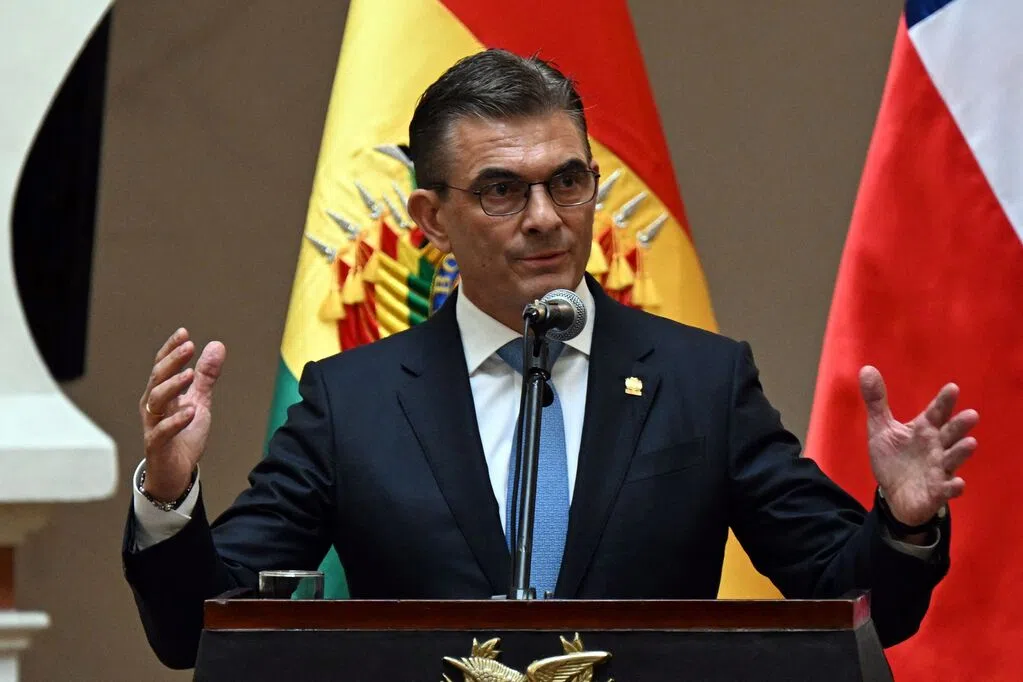
During a televised nationwide address, President Pas emphasized the urgency of the situation, noting that the declaration serves as a legal and administrative mechanism to bypass bureaucratic hurdles. This will allow the administration to rapidly redistribute emergency funds and dispatch specialized rescue and relief teams to the most severely affected provinces. "This climatic event is poised to deliver an onslaught of both severe droughts and catastrophic flooding," the President stated. "The scale of the challenge demands an unprecedented level of cooperation across all governmental institutions and agencies."
### A Nation Under Pressure
The statistics released by the Bolivian government this week paint a grim picture of the current agricultural and social landscape. Out of the country's nine provincial administrative districts, six are currently grappling with severe drought conditions. The impact on the rural population has been profound, with approximately 78,000 households reporting significant distress.
Beyond the human toll, the livestock sector has suffered a devastating blow. Reports indicate that over 75,000 head of cattle have perished due to the lack of water and forage. For many rural families in Bolivia, livestock represents not only a primary source of food but their entire life savings, making this loss a potential catalyst for long-term economic instability and food insecurity in the highlands and lowlands.
### The Mechanics of a Global Crisis
At the heart of this volatility is El Niño, a complex climate pattern characterized by the abnormal warming of surface waters in the central and eastern equatorial Pacific Ocean. This shift in ocean temperature disrupts global atmospheric circulation, altering wind patterns and air pressure. For some regions, this manifests as a complete failure of seasonal rains, while for others, it results in atmospheric instability that triggers torrential downpours and flash floods.
The current iteration of El Niño has drawn particular concern from the international community. The United Nations recently warned that the intensity of the present cycle may reach "unprecedented" levels. This global atmospheric shift is not limited to South America; its effects are rippling across East and Southern Africa, Asia, and the Pacific islands. The World Bank has already sounded alarms regarding a spike in commodity prices, warning that the resulting agricultural failures could exacerbate global food insecurity.
### Regional Instability
Bolivia is not alone in its struggle. The Andean region is currently a hotspot for climate-driven disasters. In neighboring Peru, rising temperatures have fueled a surge in wildfires, leading to at least 12 confirmed deaths and the destruction of vast tracts of forest and farmland. Meanwhile, Chile has experienced a contrasting extreme; the capital city of Santiago recorded its highest rainfall for the month of October in documented history.
This convergence of extremes—wildfires in Peru, flooding in Chile, and the drought-flood duality in Bolivia—highlights the precarious nature of the region's environment. Experts suggest that these events are not isolated incidents but are amplified by broader global warming trends, making the recovery process more difficult for nations with limited infrastructure. As Bolivia pivots its resources toward disaster management, the long-term challenge remains how to build resilience against a climate that has become increasingly unpredictable.