Tragedy in Islamabad: Fire at Major Public Hospital Claims Lives of Numerous Newborns
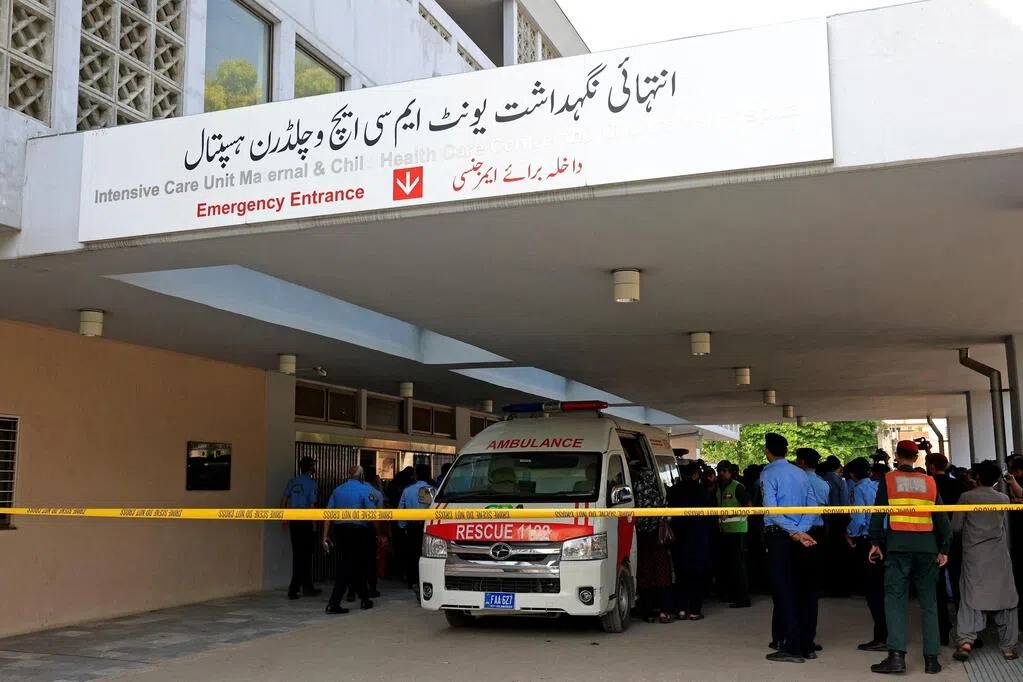
In a heartbreaking disaster that has shocked the nation, a fire broke out at the Pakistan Institute of Medical Sciences (PIMS) in Islamabad, one of the capital's most prominent public healthcare facilities. The blaze, which struck on Wednesday morning around 7:00 AM, targeted one of the most vulnerable populations: newborn infants. Reports indicate that the fire originated on the third floor of the facility, specifically within the maternal and child ward, rapidly engulfing the area and leaving staff and families with little time to react.
According to local media reports from Geo TV, the human cost of the incident is staggering. Out of the sixteen newborns present in the ward at the time of the incident, only one managed to survive. While official tallies from the Prime Minister's office place the death toll at at least 14, other reports suggest the number may be as high as 15. The sheer scale of the loss in such a concentrated area highlights a catastrophic failure in emergency evacuation and fire containment within the hospital.
Preliminary investigations by hospital sources point toward a technical malfunction in the air conditioning system as the catalyst for the fire. The malfunction likely triggered an electrical short circuit that quickly spread through the ward. PIMS is not merely any hospital; it is a central hub for medical services in Islamabad. Its prominence is such that it recently provided treatment for former Prime Minister Imran Khan, who has been incarcerated on various charges including corruption and the leakage of state secrets. The fact that such a high-profile institution could suffer such a preventable tragedy has intensified public outrage.
In response to the calamity, Prime Minister Shehbaz Sharif’s office issued a stern directive, emphasizing that negligence would not be tolerated. The government has vowed to conduct a comprehensive investigation to identify the parties responsible for the safety lapse, promising that those found liable will face the strictest possible legal punishments under the law.
However, this event is not an isolated incident but rather a symptom of a deeper, systemic crisis regarding public safety and infrastructure in Pakistan. While public hospitals offer subsidized care to the masses, they are chronically underfunded, overcrowded, and poorly managed. Regulatory bodies have frequently flagged these institutions for operating beyond capacity and failing to maintain basic safety standards.
Looking at the broader national context, Pakistan has been plagued by a series of lethal fires in large-scale buildings, often attributed to a combination of outdated building codes, lack of stringent safety regulations, and a failure of law enforcement to ensure compliance. The tragedy in Islamabad echoes a grim history of urban disasters. For instance, in January of this year, a shopping mall fire in the port city of Karachi claimed over 65 lives. Similarly, in 2023, another mall fire in the same city resulted in at least 11 deaths.
The history of industrial negligence is even more harrowing. In 2021, a factory fire in Karachi killed 16 workers, and in 2012, the world witnessed the horror of the Baldia Town garment factory fire, where approximately 250 workers perished. In that specific case, the lack of emergency exits—a basic safety requirement—was cited as the primary reason for the massive loss of life.
As the families of the infants in Islamabad mourn their loss, the disaster serves as a stark reminder that without urgent reforms in urban planning, fire safety enforcement, and healthcare infrastructure investment, Pakistan remains susceptible to these preventable tragedies. The demand for accountability now extends beyond this single hospital to the very regulatory frameworks that allow such hazards to persist.