Pyongyang and Moscow Solidify Strategic Alliance Amidst Tensions on the Korean Peninsula
### The Strengthening Axis of Pyongyang and Moscow
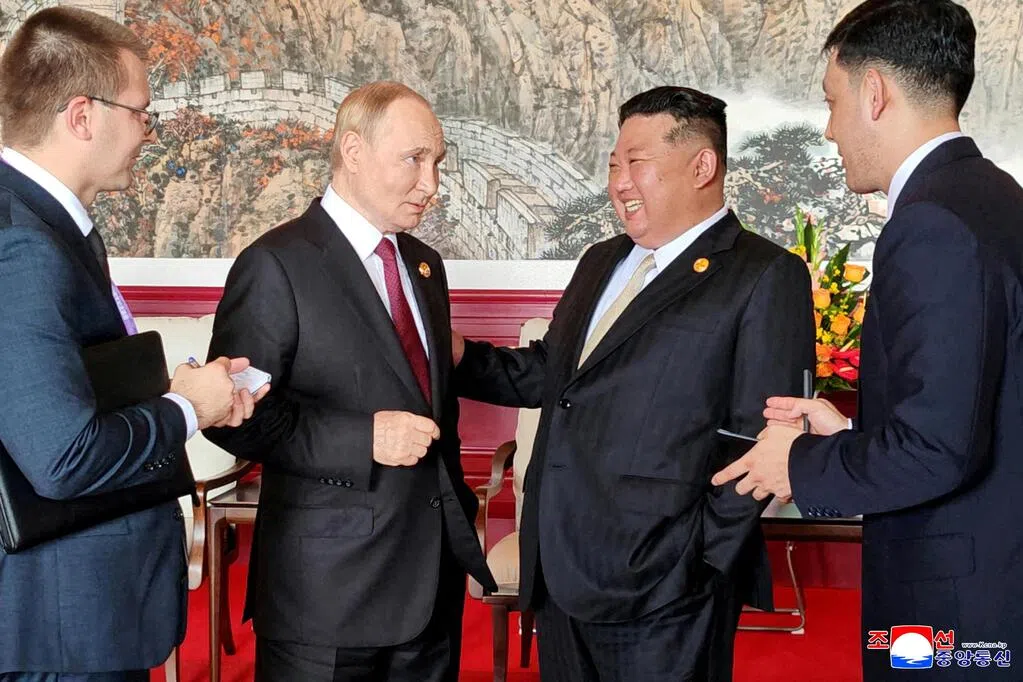
In a significant display of diplomatic solidarity, North Korean leader Kim Jong Un and Russian President Vladimir Putin have exchanged high-level correspondence, signaling a deepening alignment between their two nations. According to reports from the Korean Central News Agency (KCNA), Kim Jong Un expressed profound pride in the "steadfast relationship" shared between the Democratic People's Republic of Korea (DPRK) and the Russian Federation. In his response, sent on Saturday, Kim further praised President Putin’s leadership, voicing his confidence that under Putin's guidance, Russia would not only achieve continued prosperity but also successfully defend its territorial integrity.
This diplomatic exchange followed a congratulatory message from President Putin, who extended his wishes to the North Korean leadership on the occasion of "Homeland Liberation Day." Putin characterized the current state of bilateral ties as having reached a "comprehensive strategic partnership," a designation that suggests an unprecedented level of cooperation across multiple sectors. The Russian leader emphasized that both nations are actively collaborating in various fields and are jointly committed to maintaining regional security and stability.
### Geopolitical Implications and the Ukraine Conflict
Industry analysts suggest that this surge in diplomatic warmth is far from coincidental. Since the full-scale invasion of Ukraine by Russian forces in 2022, North Korea has emerged as a critical strategic ally for the Kremlin. The relationship has evolved into a pragmatic exchange of resources and expertise; Pyongyang has reportedly provided military support to aid Moscow's war efforts in exchange for essential economic aid and advanced military technology. This symbiotic relationship allows Russia to offset international sanctions and personnel shortages, while North Korea gains access to technical capabilities that could potentially enhance its own strategic weaponry.
### South Korea's Push for a Peace Regime
While the bond between Russia and North Korea tightens, the political climate in Seoul remains focused on a different objective. South Korean President Lee Jae-myung has recently made a public appeal for renewed dialogue with the North, advocating for a framework that ensures peaceful coexistence. During a ceremony commemorating Liberation Day in Seoul, Lee emphasized the urgent need to establish a robust guarantee mechanism to prevent accidental military conflicts.
Central to Lee's proposal is the transition from the existing armistice agreement—which has technically kept the peninsula in a state of war since 1953—to a formal "peace regime." By replacing the fragile ceasefire with a permanent peace treaty, Lee argues that both Koreas could effectively lower the risk of escalation and move toward a more stable coexistence. However, these diplomatic overtures have so far met with silence, as Pyongyang has yet to respond to the proposal.
### Volatility at the Military Demarcation Line
Despite the rhetoric of peace from Seoul, the ground reality along the border remains volatile. Recent reports from the South Korean government indicate a spike in tension at the Military Demarcation Line (MDL). Last week, South Korean military personnel were forced to discharge warning shots after several North Korean soldiers crossed the border into the South.
According to sources from the South Korean military, the warning fire successfully deterred the incursions, prompting the North Korean soldiers to retreat back across the line. While preliminary assessments suggest that the soldiers were likely performing routine patrol duties and may have inadvertently crossed the boundary, the incident marks the first time this year that the South Korean military has employed warning shots in response to a border crossing. This event highlights the precarious nature of the current security environment, where a simple patrol error could potentially ignite a larger confrontation, especially as North Korea leans further into its alliance with Russia.