France and Canada Forge Strategic Alliance as Canada Eyes EU Associate Membership
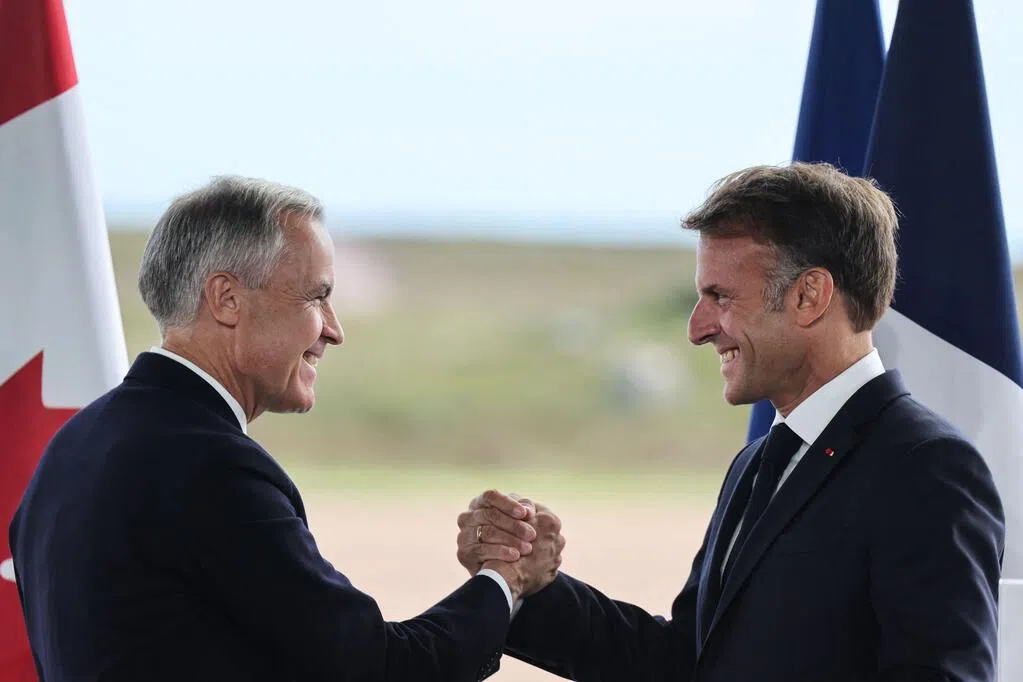
In a move signaling a significant shift in North American and European diplomacy, French President Emmanuel Macron and Canadian Prime Minister Carney convened on Sunday, September 20, to redefine the partnership between their two nations. The high-stakes meeting took place in Saint Pierre and Miquelon, a French overseas collectivity situated in the North Atlantic, just a stone's throw from the coast of Newfoundland. This choice of venue served as a powerful symbol of the enduring and geographically proximate link between France and Canada.
The summit comes at a time of profound global volatility. During a joint press conference, Prime Minister Carney described the current international landscape as being hit by a series of "new storms," specifically citing the accelerating crisis of climate change, the systematic erosion of democratic norms, and emerging threats to national sovereignty. In response to these challenges, Carney emphasized that the moment is critical for France and Canada to fortify their bonds to enhance their collective resilience against external pressures.
One of the most pivotal outcomes of the meeting was the explicit support from President Macron for Canada's integration into the European fold. Macron affirmed that France fully backs the initiative for Canada to become an "associate member" of the European Union. This proposed status would represent a historic precedent, marking the first time a non-European nation would be granted such a specialized role within the bloc. This diplomatic trajectory was further bolstered by EU Commission President Ursula von der Leyen, who recently indicated in her 2026 State of the Union address that she is committed to working with Prime Minister Carney to realize this unique membership status.
The urgency of this pivot toward Europe is largely driven by the deteriorating relationship between Ottawa and Washington. Relations between Canada and the United States reached a breaking point in late August after trade negotiations collapsed. This fallout saw U.S. President Donald Trump impose aggressive 50% tariffs on various Canadian goods. Beyond trade warfare, political tensions have escalated with Trump making provocative suggestions that Canada could eventually be absorbed as the 51st state of the U.S. Such instability has compelled Canada to seek a more diversified and secure set of allies to ensure its economic survival and political independence.
President Macron underscored that the alliance is built on a foundation of shared convictions. He noted that both nations are deeply committed to the rule of law, the sanctity of international law, and the promotion of free and fair trade. Furthermore, the two leaders agreed that scientific evidence must remain the bedrock of policy-making. A central theme of their discussion was the pursuit of "strategic autonomy," a concept that allows nations to make independent decisions without being overly reliant on a single superpower.
To translate these ideological alignments into tangible results, France and Canada have agreed to launch deeper collaborations across several critical sectors. These include aerospace exploration, renewable energy transitions, and aggressive climate mitigation strategies. By pooling their technical expertise and resources, both nations aim to create a futuristic alliance that can withstand the unpredictable nature of modern geopolitics. As Canada navigates the complexities of its relationship with its southern neighbor, the strengthening of ties with France and the broader European Union provides a vital strategic hedge, ensuring that Canada remains a sovereign, democratic, and economically viable actor on the world stage.