Deadly Collision on Egypt's Western Desert Road Sparks Outcry Over Road Safety
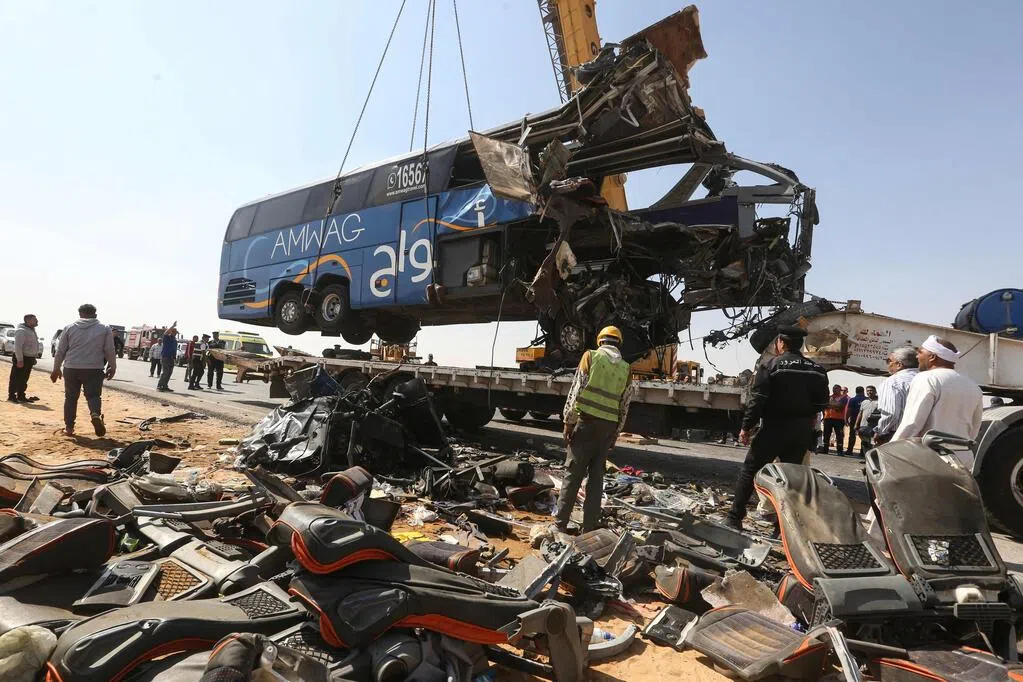
A devastating traffic accident occurred on Tuesday, October 20, on the Western Desert Road, a critical artery connecting Cairo to Assiut. The collision involved a heavy-duty truck and a tourist bus, resulting in a scene of absolute carnage that has claimed at least 13 lives and left 34 other passengers wounded.
According to reports from the state-owned Al-Ahram newspaper, the impact was so severe that the bus's forward section was virtually obliterated. Emergency response teams rushed to the site, transporting the injured to a hospital in Giza for urgent medical care. The scene described by witnesses and journalists on the ground was harrowing. A French news agency (AFP) reported that heavy machinery, including large cranes, had to be deployed to lift the mangled remains of the bus from the highway. Twisted shards of metal and passenger seats were scattered across the asphalt, with fragments of the bus still embedded in the rear of the truck, illustrating the sheer force of the impact.
While local authorities have launched a formal investigation to determine the exact cause of the crash, the incident has reignited a fierce national conversation regarding the perilous state of Egypt's road safety. This tragedy is not an isolated event but rather a symptom of a deeper, systemic failure in traffic management and infrastructure. Experts and critics point to a toxic combination of reckless driving behaviors, a widespread lack of rigorous vehicle maintenance, and a chronic failure in the enforcement of traffic laws as the primary drivers of these frequent disasters.
The scale of the problem is reflected in the grim data provided by the Egyptian National Statistics Agency. In the previous year alone, nearly 6,000 people lost their lives in road accidents across the country. These figures highlight a public health crisis on the highways, where the lack of strict regulatory oversight allows unsafe vehicles to operate and allows drivers to ignore speed limits and safety protocols with relative impunity.
Furthermore, this accident follows a worrying trend of highway tragedies that have targeted both citizens and foreign visitors. Recent history shows a pattern of instability on the roads; for instance, a separate bus overturn event on a desert highway previously resulted in 22 deaths and 28 injuries. The vulnerability of the tourism sector was also highlighted when nine Chinese tourists were injured in a crash in Southern Egypt. Perhaps most tragically, a collision in the Sinai Peninsula last month claimed 22 lives, including ten Jordanian tourists, casting a shadow over the safety of international travel within the region.
As the injured continue to receive treatment in Giza and the families of the deceased mourn their losses, the call for comprehensive reform grows louder. Analysts argue that without a fundamental shift in how traffic laws are enforced and a mandatory overhaul of vehicle safety inspections, the roads of Egypt will continue to be sites of avoidable tragedy. The current investigation into the Cairo-Assiut crash is expected to focus on whether driver fatigue or mechanical failure played a role, but for many, the cause is already clear: a systemic disregard for road safety that costs thousands of lives every year.