Putin's United Russia Party Secures Record-Breaking Majority in State Duma Elections
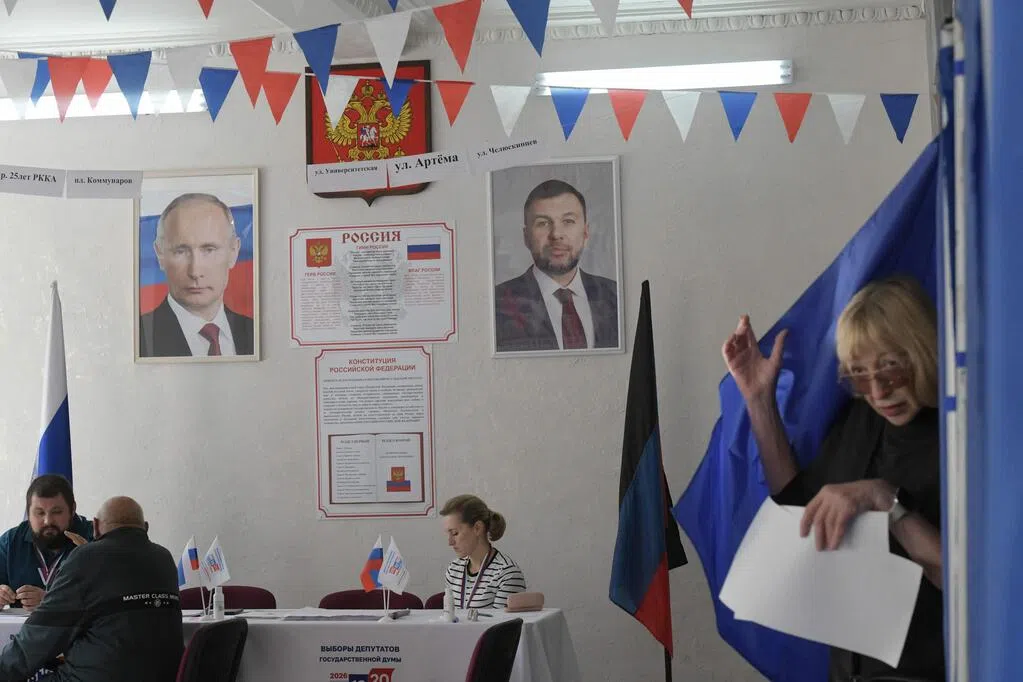
In a significant consolidation of political power, the Russian Central Election Commission has released preliminary data from the most recent three-day voting cycle. According to the announcement made by the commission's chair, Ella Pamfilova, the ruling United Russia party—the political vehicle of President Vladimir Putin—has secured a historic victory, capturing 355 seats in the 450-member State Duma. This figure marks a new peak in the party's legislative dominance, surpassing the previous high of 343 seats established during the 2016 elections.
This electoral cycle is particularly noteworthy as it represents the first parliamentary vote held since Moscow initiated its large-scale military operations in Ukraine in February 2022. The geopolitical climate has heavily influenced the political landscape, with the Kremlin seeking a clear mandate to continue its current strategic trajectory. However, the legitimacy of the process has been questioned by international critics, primarily due to the fact that no parties explicitly opposed to President Putin's policies were permitted to participate in the race.
Responding to the preliminary outcomes, Kremlin spokesperson Dmitry Peskov characterized the result as a reflection of the internal state of the nation. During a press briefing, Peskov asserted that the landslide victory demonstrates an unprecedented level of cohesion within Russian society, suggesting that the citizenry is firmly rallied around the head of state during a period of intense external pressure and international isolation.
This narrative of national unity was sharply contradicted by Kaja Kallas, the European Union's top diplomat. Kallas dismissed the election results as a performance rather than a democratic process. She argued that the Kremlin has systematically dismantled any semblance of political competition by suppressing dissenting voices and banning the only registered party that dared to oppose the war in Ukraine. Furthermore, Kallas pointed to the restriction of international election observers as evidence that Russia is merely maintaining a "facade" of democracy while operating as an authoritarian regime.
Beyond the dominant performance of United Russia, the preliminary results show a fragmented opposition consisting of parties that are generally viewed as compliant with the Kremlin. The Communist Party of the Russian Federation managed to secure second place with 40 seats. The nationalist Liberal Democratic Party of Russia (LDPR) followed with 25 seats, while the newer political entity, the 'New People' party, earned 20 seats. These figures underscore a political environment where the ruling party holds absolute control, leaving smaller parties to occupy a narrow space of sanctioned opposition.
Pamfilova reported that voter turnout for this election exceeded 59%, indicating a moderate level of participation despite the restricted political options. As of the latest update, over 95% of the total ballots have been tallied. While the preliminary numbers provide a clear picture of the outcome, the final official results are expected to be certified and published later this week.
Since the turn of the century, United Russia has acted as the primary instrument of stability and control for the Russian administration. With Vladimir Putin having held power since the cusp of 1999, this latest victory ensures that the State Duma will continue to function as a supportive body for executive decrees, effectively removing any legislative hurdles for the Kremlin's domestic and foreign policies in the years to come.