Escalating Tensions: Iran-Backed Houthis Declare Naval Blockade Against Saudi Arabia
### A New Front in the Regional Power Struggle
In a move that threatens to destabilize an already volatile region, the Iran-backed Houthi rebels of Yemen announced a comprehensive naval blockade against Saudi Arabia this Monday. This bold declaration marks a significant shift in the tactical approach of the Houthi movement, transitioning from sporadic missile strikes to a strategic maritime strategy aimed at strangling the economic and logistical arteries of the Saudi Kingdom. The announcement comes on the heels of a series of violent exchanges that have shattered a fragile period of relative stalemate.
### The Rhetoric of Retaliation
Brigadier General Yehia Saree, the military spokesperson for the Houthi forces, delivered the announcement through a video statement on July 20. His language was uncompromising, grounding the decision in the principle of "an eye for an eye." Saree explicitly stated that the naval blockade is a direct response to what he described as the "evil Saudi enemy's" long-standing restrictions on ports and airports currently under Houthi administration.
According to the Houthi leadership, the move is not an act of aggression but a symmetrical response. By implementing a "blockade for a blockade," the Houthis intend to force the Saudi-led coalition to reconsider its aerial and maritime restrictions. Saree further warned that any "foolish" reactions from Riyadh in response to this escalation would be met with a "comprehensive and decisive" counter-attack, signaling that the Houthis are prepared for a full-scale escalation of hostilities.
### Catalysts of the Current Crisis
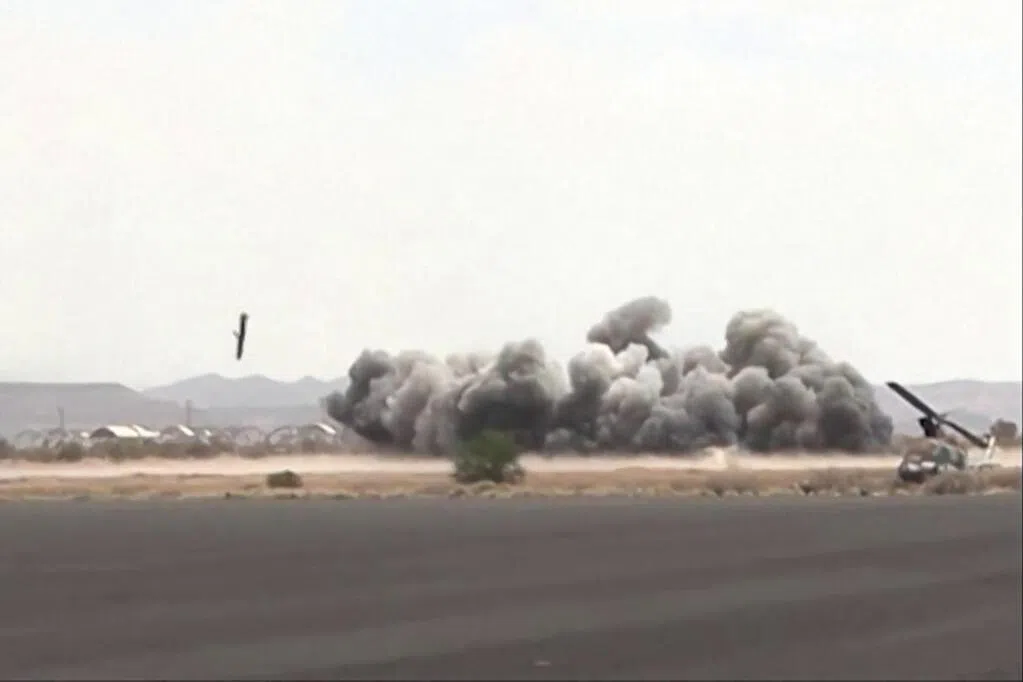
The current spike in tension is rooted in a series of events that unfolded over the past week. The friction reached a boiling point when the Yemeni government, supported by Saudi Arabia, launched strikes against the Sana'a airport. These operations were reportedly designed to prevent a flight carrying an Iranian delegation from landing, highlighting the deep-seated anxiety Riyadh feels regarding Tehran's influence within Yemen.
In immediate retaliation for these strikes, the Houthis launched a missile attack on July 13, targeting an airport in Abha, a city located in the southern highlands of Saudi Arabia. While the Houthis attributed the strike to the Yemeni government's supporters in Riyadh, the incident served as a catalyst for the subsequent declaration of the naval blockade. For over a decade, the Saudi-led coalition has maintained a strict grip on Yemen's airspace, requiring all flights to obtain prior authorization—a policy the coalition claims is necessary for security and at the request of the internationally recognized Yemeni government.
### Geopolitical Implications and the Iranian Shadow
Analysts suggest that this escalation is not merely a local dispute between Houthi rebels and the Saudi state, but a manifestation of the broader proxy war between Iran and Saudi Arabia. By empowering the Houthis to challenge Saudi dominance in the Red Sea and the surrounding air corridors, Tehran appears to be testing the limits of Saudi Arabia's resolve and its ability to protect its sovereign borders.
The timing of these events is particularly sensitive given the ongoing international military dynamics. The United States recently approved a massive arms sale to Saudi Arabia, totaling nearly $2 billion, intended to bolster the Kingdom's defense capabilities. This influx of advanced weaponry may be perceived by the Houthis and their Iranian backers as an escalation, further fueling the cycle of violence.
### Risks to Global Maritime Security
The implementation of a naval blockade by the Houthis carries risks that extend far beyond the borders of Yemen and Saudi Arabia. The region is home to some of the world's most critical shipping lanes, including the Bab el-Mandeb strait. Any disruption in these waters could lead to a spike in global shipping costs and impact the flow of oil and commercial goods. As the Houthis move from land-based insurgency to maritime disruption, the international community faces the prospect of a widened conflict that could draw in global superpowers and jeopardize the economic stability of the Middle East.