Spain Imposes Reciprocal Border Controls on Italy Amid Escalating Migrant Dispute
The spirit of seamless travel across Europe has faced a sharp setback as Spain and Italy enter a diplomatic standoff over border security and migration management. On Friday, August 7, the Spanish government officially declared that it would reinstate temporary border controls for all travelers arriving from Italy, including those arriving via flights and maritime vessels. These measures are scheduled to commence at midnight on Saturday, August 8, and will remain in effect until September 2024, specifically ending on September 7.
According to an official statement released by the Spanish authorities, the decision was prompted by what they describe as 'continuous and relentless pressure' regarding illegal immigration flowing through Italian channels. Under the newly implemented protocol, Spanish border agents will conduct rigorous inspections of passports, nationalities, and visas for all individuals arriving from Italy, as well as passengers from other nations who have entered Spain via Italian territory. Spain asserts that this reciprocal action is 'proportionate and necessary,' arguing that it is a required response to maintain the rights of Spanish citizens and ensure the functional stability of the broader Schengen zone.
This escalation is the culmination of a week of mounting tension between Madrid and Rome. Earlier on Friday, Spain expressed strong condemnation regarding Italy's actions on August 1, when the Italian government unilaterally restored border checks for Spanish travelers without any prior notification or consultation. The Spanish government has characterized Italy's unilateral move as 'unjust and discriminatory,' further stating that such actions are fundamentally contrary to the collective interests of the European Union and constitute a breach of the established Schengen Border Code. While Spain initially urged Italy to rescind these measures, the lack of cooperation has led to this retaliatory stance.
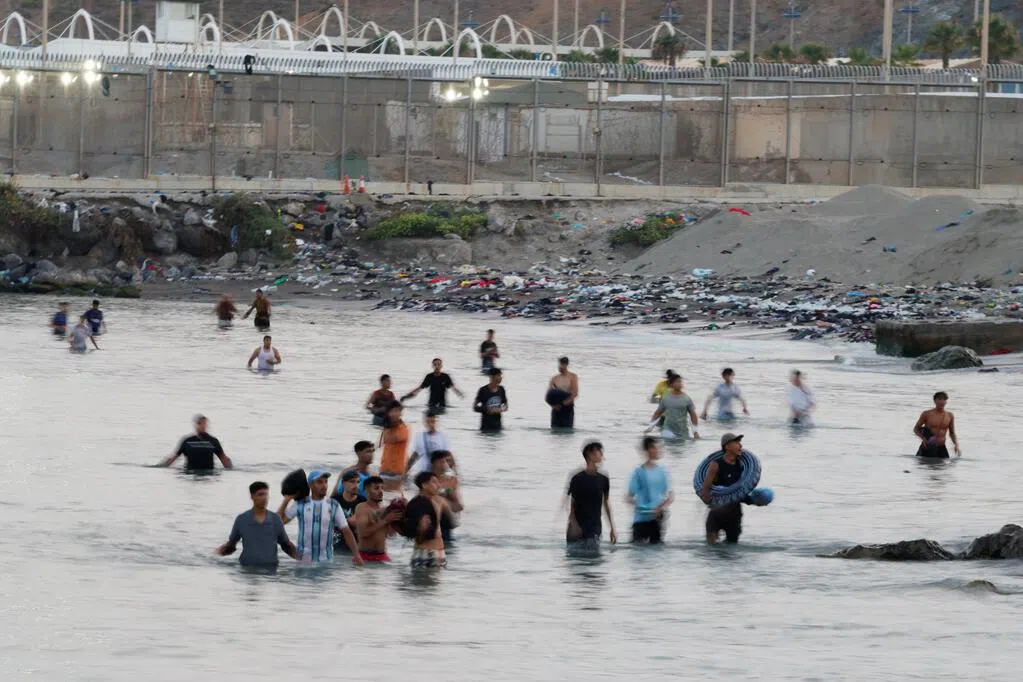
The roots of the conflict trace back to a humanitarian and security crisis in late July. On July 30 and 31, tens of thousands of illegal migrants attempted to enter Ceuta, a Spanish autonomous city and enclave located on the North African coast, bordering Morocco. The surge involved migrants crossing sea routes or scaling border fences, marking one of the most severe border crises Spain has encountered in recent years. In response to the chaos in Ceuta, Italian Prime Minister Giorgia Meloni announced on the evening of July 31 that Italy would suspend the Schengen free-movement mechanism between the two countries to prevent a potential spillover of migrants into Italian territory.
However, the Spanish government has vehemently disputed the logic behind Italy's decision. Madrid points out that Ceuta operates under a special administrative regime; anyone entering the enclave illegally is subject to strict police surveillance and is prohibited from traveling to mainland Spain without undergoing rigorous security screenings. Consequently, Spain argues that the migrants in Ceuta never had the possibility of freely entering the Schengen Area, let alone migrating onward to Italy. Furthermore, Spanish authorities have confirmed that the vast majority of the migrants who surged into Ceuta have already been repatriated to Morocco.
As both nations tighten their borders, the dispute highlights a growing fragility within the Schengen Agreement. The agreement was designed to eliminate internal border checks to facilitate trade and tourism, yet it allows for temporary reinstatements under exceptional security threats. The current dispute between Spain and Italy suggests that national security concerns and the political pressure of the migration crisis are beginning to outweigh the commitment to European integration. For now, travelers between the two Mediterranean powerhouses can expect delays and increased scrutiny as the diplomatic rift continues to widen.