Keiko Fujimori Claims Historic Victory in Tight Peruvian Presidential Race
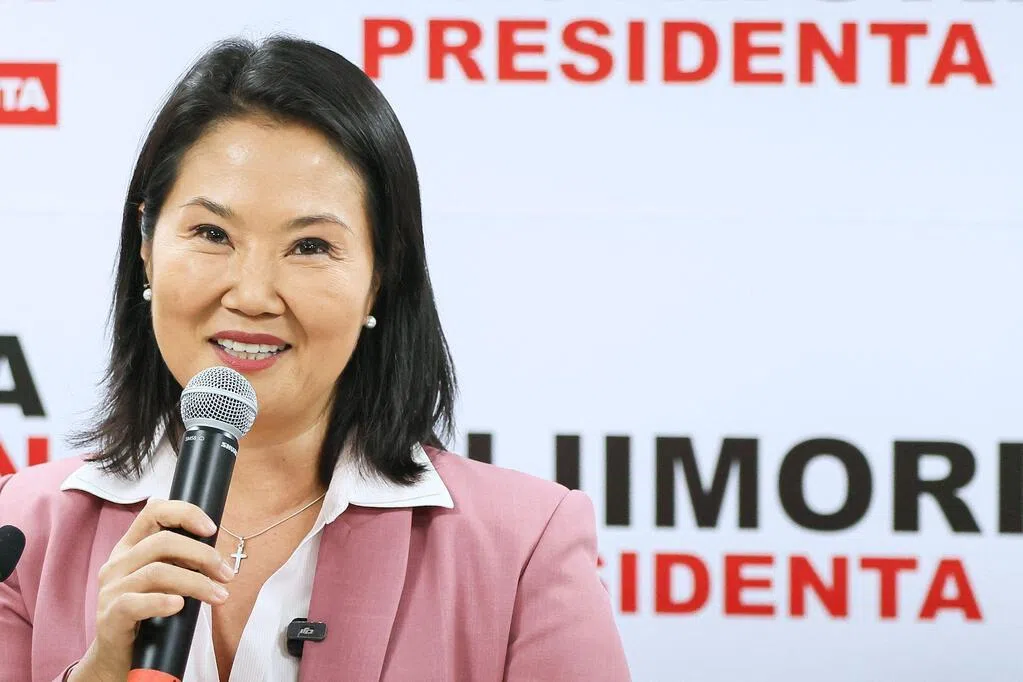
Peru has reached a significant political milestone following the announcement of the final results from its presidential runoff election. After a grueling journey that included four separate campaigns for the presidency, Keiko Fujimori, the candidate for the right-wing Fuerza Popular party, has narrowly secured the victory. According to the official tallies released by the National Office of Electoral Processes on Monday, Fujimori obtained 50.135% of the total vote, narrowly edging out her left-wing rival, Roberto S£nchez of the "Together for Peru" coalition, who received 49.865%.
This victory is not merely a political win but a historic breakthrough, as Keiko Fujimori becomes the first woman to ever be elected as the president of Peru. Speaking to the press from outside her home, the president-elect expressed a sense of humility and caution while awaiting the formal certification of the results from the National Elections Jury. Fujimori acknowledged the deep fractures within the Peruvian electorate, stating that the country remains profoundly divided. She emphasized her commitment to listening to citizens from across the political spectrum, promising to lead with a vision of restoring "order and hope" to a nation weary of instability.
The ideological divide between the two candidates could not be more stark. Fujimori, the 51-year-old daughter of former President Alberto Fujimori, advocates for a continuation of pro-market policies. Her platform centers on attracting foreign investment and maintaining a business-friendly environment to stimulate economic growth. Furthermore, she has pledged to implement a hardline approach to security, promising to use aggressive measures to combat rising crime rates and restore law and order across the provinces.
In contrast, the 57-year-old Roberto S£nchez championed a drastically different vision for the country. His campaign focused on shifting the national development model, arguing for a stronger role for the state in managing the economy and ensuring social equity. Regarding public safety, S£nchez argued that crime should be addressed through comprehensive social policies and improved governance rather than through purely punitive measures.
However, the transition of power is unlikely to be seamless. Prior to the final count, S£nchez voiced strong objections regarding the counting of overseas ballots, alleging irregularities and procedural violations. He stated firmly that he would refuse to accept the results if they were found to be tainted, indicating that he would file formal complaints with electoral authorities and, if necessary, escalate the matter to international monitoring organizations. While S£nchez has remained relatively quiet in the hours following the final announcement, his earlier threats to not recognize a Fujimori administration suggest a period of potential volatility.
The path to this final showdown began in April during the first round of voting, where no candidate managed to secure an absolute majority. This triggered the runoff between the two top-tier candidates, Fujimori and S£nchez. Under Peruvian electoral law, the candidate who receives the most votes in the second round is declared the winner regardless of the margin.
As Fujimori prepares to take office, she faces the daunting task of unifying a country where the margin of victory was a mere 0.27%. The narrow gap reflects a nation split between those who desire a market-oriented, conservative leadership and those who seek a socialist-leaning transformation of the state. The international community now looks toward Lima to see if the new administration can bridge these divides or if the political polarization will further destabilize the region.